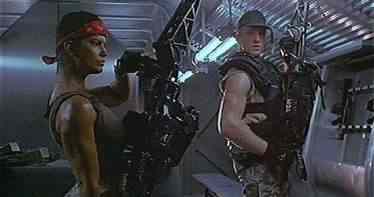
One of my two worst movie fears is coming true with the news that Terminator is getting a reboot that will (inevitably) be the beginning of a new trilogy. My other worst fear is that next in Hollywood's sights will be the Back to the Future trilogy. Robocop and Total Recall remakes I can handle but Terminator 1 and 2 and the BTTF trilogy are my untouchable sacred cows.
I can deal with endless inferior sequels to classics like Die Hard and I can handle remakes of some of Hollywood's output but I can't stomach a Terminator reboot. Every year I show students in my Film Studies class both Terminator 1 and 2 when we are studying how to analyse films from a genre and feminist approach. Each year some students grumble about Terminator 1 which occasionally looks very dated in places but then we get to Terminator 2 and I think pretty much every student loves it.
Some would argue the first Terminator is in need of a remake then if it fails to grab the youth and looks dated in terms of 80s hair cuts and some dodgy stop-motion scenes. I would argue otherwise. With Terminator 2 still looking relatively fresh and still dazzling in terms of its brilliant use of CGI, the pair of films perfectly complement each other and while the original might be a bit harder to stomach for modern young audiences, it is an inspiring example of what can be achieved on a modest budget.
I hear Arnie might be back for the reboot, no doubt shoe horned in by some dodgy bit of screen writing that introduces him as the creator of the Terminator programme or something. I also hear rumours of Paul Walker appearing which is worrying. No real offence to Paul Walker but I can't bear to see him as a new Kyle Reese. Admittedly though, he looks ok below. I guess as long as he's not John Connor.
I just don't see how a reboot can improve on the original stories or action scenes. Then again, I'm not sure reboots often even have the intention of improving on anything. I want to say boycott this reboot at all costs but on the other hand, I know as the stills, posters, and trailers start to roll in, I'll probably start getting excited about it. However if we can convince enough people to stay out of the cinemas for this one, perhaps we can stop the inevitable Back to the Future prequel which I can predict won't be far behind. (They're bound to try and get Fox and Lloyd in for cameos).
There are so many things I don't want to see ruined about these movies, I can't even begin to count them. I wish instead of rebooting, Hollywood could just take a chance on something original that could potentially be of the same quality as James Cameron's films. Before buying a ticket for the Terminator reboot, I urge you to please remember there is no fate but what we make for ourselves.
Pages
- Buy my book here! The Devil's Advocates - THE BLAIR WITCH PROJECT - Buy now from Amazon by clicking here - Horror Channel call it a 'must buy' - Click here
- Home
- Rotten Tomatoes
- Starburst Magazine
- Amazing Radio
- Yahoo TV
- Media Magazine
- Interviews
- Short Stories
- Reviews A - M
- Reviews N - Z
- Trailers A-Z
- Published articles
- YouTube Videos
- Cannes 2015
- LFF 2017
- Static Mass Emporium
- What Culture
- Top 10 Lists
- A2 Film Studies
- AS Film Studies
- Music Video
- BTEC Film Studies
- BTEC TV and Film Industries
- All Time Top 100
Showing posts with label terminator 2. Show all posts
Friday, 12 July 2013
Tuesday, 9 April 2013
The 5 Funniest Movie Cameos
Movie cameos can be clever, serious or poignant and then many others can be very, very silly. Sometimes stars can make fools of themselves, popping up in silly films and being very silly. With Scary Movie 5 fast approaching and promising embarrassing entries from all sorts of has-beens, I thought I'd take a quick look at some of the best movie cameos that have made me almost rolling on the floor laughing.
Edward Norton in The Invention of Lying as a cop with a coke habit. Cameos are always funniest when a 'serious' actor is willing to get very, very silly.
Martin Sheen in Hot Shots Part Deux. Blink and you'll miss it as the Sheens pass each other on boats and get the opportunity to compliment each other on finer moments in their careers.
Robert Patrick in Wayne’s World 2. For fans of Terminator 2 (and let's face it, who isn't?), this one is utterly hilarious. I just wish the T-1000 had broken into a run at the end of this clip.
Tom Cruise in Tropic Thunder. Will Les Grossman get his own spin off film? I for one hope he doesn't. A little bit of Grossman goes a long way.
Bill Murray in Zombieland. Instantly classic. If they do get round to making a sequel, it will take someone pretty special to top a cameo of this silliness.
I wonder what Anchorman 2 will have to offer and if they can top the likes of Tim Robbins in the sequel? What are your favourite funny movie cameos?
Labels:
bill murray,
cameo,
comedy,
edward norton,
funny,
hot shots part deux,
les grossman,
martin sheen,
robert patrick,
terminator 2,
the invention of lying,
tom cruise,
top 5,
tropic thunder,
zombieland
Sunday, 7 April 2013
Remembering Roger Ebert
Beloved film critic Roger Ebert died on April 4th 2013 at the age of 70 after a long battle with cancer. I have written an In Memoriam piece on the late, great critic Roger Ebert over at Filmoria.
President Barack Obama said 'Roger was the movies'.
His wife Chaz said 'the world has lost a visionary and a creative and generous spirit who touched so many people all over the world'.
He had just announced the day before his death his intention to slow down after writing '306 movie reviews, a blog post or two a week, and assorted other articles' in 2012 alone.
I didn't grow up reading Roger Ebert's reviews like so many others. I was well aware of Siskel and Ebert, if not just because The Bloodhound Gang had that lyric 'Yes I'm Siskel, yes I'm Ebert and you're getting two thimbs up'. Check it out:
But I did occasionally check out his reviews and most often enjoyed them. I didn't always agree with them obviously but when he got it right, he really nailed it. I'm going to share a couple of my favourites:
On Titanic: 'Movies like this are not merely difficult to make at all, but almost impossible to make well. The technical difficulties are so daunting that it's a wonder when the filmmakers are also able to bring the drama and history into proportion. I found myself convinced by both the story and the saga.'
On City of God: It 'does not exploit or condescend, does not pump up its stories for contrived effect, does not contain silly and reassuring romantic sidebars, but simply looks, with a passionately knowing eye, at what it knows.'
On Trainspotting: 'It uses a colorful vocabulary, it contains a lot of energy, it elevates its miserable heroes to the status of icons (in their own eyes, that is), and it does evoke the Edinburgh drug landscape with a conviction that seems born of close observation.'
On Terminator 2: 'T1000, as played by Patrick, is a splendid villain, with compact good lucks and a bland expression. His most fearsome quality is his implacability; no matter what you do to him, he doesn't get disturbed and he doesn't get discouraged. He just pulls himself together and keeps on coming.'
On Schindler's List: 'What is most amazing about this film is how completely Spielberg serves his story. The movie is brilliantly acted, written, directed and seen. Individual scenes are masterpieces of art direction, cinematography, special effects, crowd control. Yet Spielberg, the stylist whose films often have gloried in shots we are intended to notice and remember, disappears into his work. Neeson, Kingsley and the other actors are devoid of acting flourishes. There is a single-mindedness to the enterprise that is awesome.'
We certainly didn't agree on Fight Club which Ebert called 'the most frankly and cheerfully fascist big-star movie since Death Wish' and a 'a celebration of violence'but his review is a brilliant teaching tool and I'm sure to always read it with my students when we discuss the film.
Anyway please go check out my proper In Memoriam piece on the late, great film critic Roger Ebert over at Filmoria.
What was your favourite Roger Ebert review?
President Barack Obama said 'Roger was the movies'.
His wife Chaz said 'the world has lost a visionary and a creative and generous spirit who touched so many people all over the world'.
He had just announced the day before his death his intention to slow down after writing '306 movie reviews, a blog post or two a week, and assorted other articles' in 2012 alone.
I didn't grow up reading Roger Ebert's reviews like so many others. I was well aware of Siskel and Ebert, if not just because The Bloodhound Gang had that lyric 'Yes I'm Siskel, yes I'm Ebert and you're getting two thimbs up'. Check it out:
But I did occasionally check out his reviews and most often enjoyed them. I didn't always agree with them obviously but when he got it right, he really nailed it. I'm going to share a couple of my favourites:
On Titanic: 'Movies like this are not merely difficult to make at all, but almost impossible to make well. The technical difficulties are so daunting that it's a wonder when the filmmakers are also able to bring the drama and history into proportion. I found myself convinced by both the story and the saga.'
On City of God: It 'does not exploit or condescend, does not pump up its stories for contrived effect, does not contain silly and reassuring romantic sidebars, but simply looks, with a passionately knowing eye, at what it knows.'
On Trainspotting: 'It uses a colorful vocabulary, it contains a lot of energy, it elevates its miserable heroes to the status of icons (in their own eyes, that is), and it does evoke the Edinburgh drug landscape with a conviction that seems born of close observation.'
On Terminator 2: 'T1000, as played by Patrick, is a splendid villain, with compact good lucks and a bland expression. His most fearsome quality is his implacability; no matter what you do to him, he doesn't get disturbed and he doesn't get discouraged. He just pulls himself together and keeps on coming.'
On Schindler's List: 'What is most amazing about this film is how completely Spielberg serves his story. The movie is brilliantly acted, written, directed and seen. Individual scenes are masterpieces of art direction, cinematography, special effects, crowd control. Yet Spielberg, the stylist whose films often have gloried in shots we are intended to notice and remember, disappears into his work. Neeson, Kingsley and the other actors are devoid of acting flourishes. There is a single-mindedness to the enterprise that is awesome.'
We certainly didn't agree on Fight Club which Ebert called 'the most frankly and cheerfully fascist big-star movie since Death Wish' and a 'a celebration of violence'but his review is a brilliant teaching tool and I'm sure to always read it with my students when we discuss the film.
Anyway please go check out my proper In Memoriam piece on the late, great film critic Roger Ebert over at Filmoria.
What was your favourite Roger Ebert review?
Thursday, 18 October 2012
Feminist Analysis of Terminator 1 and 2
Here's a look at the first two Terminator films taking a feminist approach. This is for my BTEC Film Studies
students who are currently writing up their own feminist analysis of science
fiction films which I hope they will then turn into a blog post just
like this! It follows from yesterday's genre analysis of The Terminator. Enjoy reading and please leave any feedback if you have
anything to say about what has been written here. After reading this, you may also find it interesting to read David Jackson's piece on why he thinks James Cameron is misandrist.
![]() |
| The icon returns... as the good guy! |
Feminism
is a movement that began in the early 20th Century with the purpose
of creating equal rights for women. At
this point, women were not allowed to vote and had very little opportunities
for employment or even control over their own bodies. Women were virtually possessions for their
husbands and domestic violence was even more common than it still worryingly is today. Feminists argued for women’s right to vote
and for equal rights with men in the workplace and in the home. They were advocates for methods of birth
control becoming available so women could take more control of their own
bodies.
Feminist
film theory is important because films are such a popular and influential
medium. Feminist theorists are
particularly concerned with the role of women in films and how they are represented. They analyse films from a feminist
perspective, looking specifically at the development and empowerment of women
in narratives, the relationship between female characters, the male gaze and
the idea of containment of women.
![]() |
| Help! |
In
The Terminator, Sarah Connor is
firstly represented as a stereotypical damsel in distress figure. She is the princess that needs to be rescued
from the evil villain by a heroic male figure.
Kyle Reese is a soldier sent back from the future to protect Sarah from
the Terminator. Sarah is represented as
a weak woman and she is employed as a waitress but finds it difficult as she is
disrespected by the customers. When the
Terminator finds Sarah she is scared and feeling hunted as a strange man has
been following and watching her. This
turns out to be Reese who than saves her by shooting at the Terminator. Sarah is dragged around by Reese who
continually saves her from death. He is
the character with knowledge in the story and he has to repeatedly tell Sarah
what is going on.
![]() |
| Man strong, woman weak |
As
the story progresses, Sarah learns how to defend herself a bit more. The male character teaches her to make bombs
and how to use weapons. Sarah is
dependent on the knowledge and skill of the male character. By the end Sarah has become the final girl,
like in many slasher films as her protector has died trying to save her. Even before his death, Sarah has become
stronger and when Reese is injured she is the one that encourages him to keep
going. Finally when Reese dies, after
injuring the Terminator, Sarah must fight back and gain her independence. She crushes the Terminator despite her
injury.
![]() |
| Literally contained |
In
Terminator 2, Sarah has been
institutionalised because figures of patriarchal authority such as the police
and doctors believe she is crazy. This is an example of containment. Sarah is now a strong, independent woman and
she has been locked up in a mental institution for it. Sarah is first shown as strong and in control
of her body and surroundings. She has
turned her cell into a makeshift gym so that she can do chin ups. She is watched by a team of doctors like a
dangerous caged animal. She is
resourceful and intelligent and almost escapes the hospital without any help. When the Terminator arrives with her son, she
is briefly relegated again to the damsel in distress role.
![]() |
| Tooled up |
However
throughout the film, Sarah is tough, good with typical masculine weaponry such as guns and determined. Increasingly she becomes more dependent on
the Terminator as he is stronger and virtually indestructible. In the final scene where Sarah confronts the
villain, it is the ‘male’ Terminator who must finish the job when Sarah runs
out of bullets. Therefore Sarah’s
position in the film becomes less prominent as the male characters become
increasingly important. On a few
occasions she is actually a hindrance to the mission and has to be told to calm
down and remain focused by her ten year old son.
Feminists
would find the representation of women in the film to be progressive in the
lack of a male gaze set up in the films.
The idea of the male gaze suggests that women are often objectified and
sexualised by male screenwriters and directors.
Women are often filmed to emphasise their attractiveness to the male
audience and the viewer is often positioned to look at women as if they are a
male character staring at the woman’s body.
Sarah Connor is never a sex object, although in the first film there is
a sex scene where her bare breasts are visible.
However for the most part, especially in the second film, Sarah is not
dressed in sexualised clothes and the camera does not linger on her body or her
appearance.
![]() |
| The male gaze |
On
the other hand, in Transformers and
the sequel, Mikaela Banes is played by Megan Fox and is constantly dressed in
revealing clothes such as short skirts and tight tops. Though she is quite a strong character who
displays knowledge of car mechanics and gets to fight alongside the heroes in
the final battle, she is also objectified as she leans over a car and then a
motorbike in the sequel. The camera
tilts up her body showing us the reaction of the male character as he looks at
her. The audience is invited to identify
with the male hero as he enjoys the look of the female character.
![]() |
| The Fox |
The
notion of containment is also central to feminist film theory. Often strong female characters have to be
contained by the men who write and direct Hollywood films. Even though Thelma and Louise for example try
to break free of social norms, they have to kill themselves at the end of the
film in a last act of defiance.
Similarly strong women are often contained by the patriarchal idea that
they must be mothers. In films from Kill Bill to Aliens to Terminator 2,
the female heroes of the story are strong because they are protective of their
offspring or because they take the role of a surrogate mother. Sarah Connor is only important because she
gives birth to the leader of the human resistance in the films. Her role as mother is the most important
thing about her. She is fighting to
protect her son John Connor so that he can grow up to save the human race in
the future. Her caring nature as a
mother figure also means that she fails in an assassination attempt later in
the film. When a child pleads with her
to not kill his father, Sarah breaks down and cannot continue in her
actions. Again, she is saved by the male
characters that come to help her.
![]() |
| Mummy you're so badass. |
This
is a common way for screenwriters to assert patriarchal ideology over strong
female characters. Sarah Connor is also
literally contained at the start of Terminator
2 because she has tried to fight the system and figures of authority have
deemed her insane. She is even licked by
a male nurse as a reminder to the audience that she is a woman and therefore
vulnerable and targeted by men. However
it is only with the help of male characters that she can break free of this
containment.
![]() |
| Kicking ass for kids. |
![]() |
| Can I get a hug? |
Labels:
aliens,
analysis,
feminism,
james cameron,
kill bill,
megan fox,
resident evil,
sarah connor,
science fiction,
terminator,
terminator 2,
thelma and louise,
tomb raider,
transformers
Wednesday, 17 October 2012
Genre Analysis of The Terminator
Here's a look at The Terminator and some other science fiction films taking a genre approach. This is for my BTEC Film Studies students who are currently writing up their own analysis of science fiction films which I hope they will then turn into a blog post just like this! Enjoy reading and please leave any feedback if you have anything to say about what has been written here.
![]() |
| Arnie becomes an icon |
The Terminator
(James Cameron, 1984) is a hybrid of genres.
It has elements of science fiction, horror and action films. Some of the conventions that make it recognizable as a science fiction film are the use of robots and scenes that
are set in the future. It has horror
conventions such as an unstoppable monster that will not die and does not feel
pain. It is also mostly set at night and
has a girl being relentlessly chased by the monster/robot. The Terminator is also full of car chases,
gun fights and explosions which audiences expect to find in an action film.
Firstly,
The Terminator is science
fiction. The hero and villain are time
travellers from the future. The audience
knows this by the dialogue and the fact that the villain is a cyborg. Time travel is not overly significant to the
plot as once the protagonist and antagonist are in the present, they do not
travel back and forth in time again.
Many other science fiction films use time travel much more with
characters going to the past, the future and their present. An example of this is the Back to the Future trilogy where the
protagonist travels from 1985 to 1955 to 2015 to 1855. This is only possible in science fiction and
allows the characters to have adventures in different time periods. It also allows the filmmaker Robert Zemeckis to make a science fiction Western hybrid in Part 3 of
the trilogy.
![]() |
| Genre Hybrids: Back to the Future Part 3 |
Cyborgs
are a science fiction convention that do not exist in the present. They are robots that appear human. Beneath the skin it has a metal
endoskeleton. This metal endoskeleton
helps the film conform to genre expectations of the horror and action
film. The Terminator is almost
invincible so it can survive gun fights and even explosions. This means the heroes have to repeatedly try
to kill it, leading to more action scenes.
It also means that the villain keeps rising after it appears to have
been killed. This makes it similar to
the slasher films' psycho killers like Michael Myers of Halloween and Jason Vorhees of Friday
the 13th. The use of a metal
endoskeleton signifies the robot's strength and power and how hard to kill it
will be. The skeleton signifies that it
is dead and therefore impossible to kill.
Its red eyes and gritted teeth also make it appear angry, scary and
determined.
![]() |
| Michael Myers just won't stay dead |
The
future is presented in the film through the use of flashbacks. It is dystopian as machines have waged a war
on the human race and there are few survivors.
It is darkly lit and there are flying machines and Terminator robots
that hunt down human survivors. The
bleak future is created through special effects such as models of robots and
ruined cities. Humans live underground
and hunt rats, showing the dire situation that the human race is in, in the
future. Technology is killing humans and
this emphasises a message that humans depend too much on technology and are
advancing too quickly in the present.
Science fiction films set in dystopian futures often have messages to convey
about the time in which they were made.
An example of this is Children of
Men that takes place in England, 2027.
The human race is infertile and London is dirtier and more polluted than
it is now. The only thing that seems to
be looked after and technologically advanced is adverts on the side of buses
and buildings. This suggests that
corporate power and greed remain unchanged from present times. There is a bombing in the opening scene and
lots of references to patriotic values and discrimination against
immigrants. This is clearly a reference
to the post 9/11 behaviour of the British and American governments and
demonstrates how genres adapt over time.
The culture also seems obsessed with celebrity as shown by their staring
at the screen and grief over the death of someone they have never met. Children
of Men offers a different vision of the future from The Terminator, but still has uses science fiction conventions to
represent it.
![]() |
| Children of Men's dystopian future London |
Robots
are not present in Children of Men
but they feature prominently in The Terminator
and Transformers. They are futuristic as they have real human
skin and hair and can sweat and bleed. The Terminator also has a type of
'Terminator vision' created by a red tint and various bits of written
information scrolling on the screen when the audience sees from The
Terminator's point of view. Like in Transformers, the robots disguise
themselves; The Terminator as a human and the Transformers as various vehicles.
![]() |
| Terminator POV |
The
music and editing also helps the audience to decipher the genre. For the action moments such as car chases and
fights, the music speeds up. The synth
score sounds futuristic and the high pitched string sounds are very reminiscent
of classic horror music from films such as Psycho. Tension is created through the use of
intercutting between the Terminator and his prey, Sarah Connor. The audience is made to worry about Connor’s
safety by the order of the shots. The
Terminator is also shot from a low angle to make him look dominant. This is common for villains and sometimes
heroes.
![]() |
| Terminator terminating. |
Terminator
is structured like many other horror, science fiction and action films. It introduces a hero and a villain at the
beginning and sets them up as binary opposites.
The human is vulnerable, caring and sensitive and willing to do
anything, including sacrificing himself, for the good of the human race. The Terminator is set up as exactly the
opposite. It may look human but it is
made of metal and therefore hard to kill, it has no feelings and its purpose is
to destroy humans. The human and robot
come into a series of conflicts together; gun fights, car chases and eventually
at the climax hand-to hand combat. The
action film is often structured around a series of confrontations and
set-pieces. The target audience want stunts,
action and fighting and so conversations and dialogue are scattered through the
film between big action moments.
![]() |
| Kyle Reese: Human Hero |
Terminator
also subverts the expectations of the crime and action film as The Terminator
drives a police car in one car chase.
This means the villain is driving a symbol of law and order. Usually the police are a force for good in
action films and this use of the police car suggests that the Terminator is the
new symbol of order. He will not stop
until he catches his prey, like the determined detectives of many action films. This is taken further in the sequel as the
T1000 villain morphs into the figure of a policeman throughout the film. It also subverts expectations and adapts to
reflect more modern representations of women than were present in many of the
science fiction films of the 1950s.
Sarah Connor may begin the film as a typical damsel in distress but by
the end she is a strong female who must fight the villain by herself and wins. This is similar to the convention of the ‘final
girl’ in slasher films who is the last survivor of the killer and must fight
back to survive. This convention can be
seen in films including Halloween and
Friday the 13th.
![]() |
| Sarah Connor: The Final Girl |
Labels:
analysis,
arnold schwarzenegger,
back to the future,
btec media,
children of men,
film studies,
genre,
james cameron,
kyle reese,
sarah connor,
science fiction,
slashers,
terminator,
terminator 2
Monday, 9 July 2012
Are James Cameron’s Movies Misandrist, and What Would he Hope to Gain if They Were?
Before I begin, there are two things I’m
going to need to tackle. The first thing is that I actually really enjoy most of director James Macaron Cameron’s output (apart from
Titanic, but that doesn’t mean it will escape comment!). You may have read my outright praise for Aliens in the past. His plotlines and dialogue are elegant and
functional, and the action scenes which drive his movies are hyperkinetic
without being incomprehensible. There’s a lot going on, but he can hold a
camera still for a few seconds rather than chucking it across the room a la Transformers.
The other thing is what misandry is. I’m
sure you’re all familiar with its counterpart, misogyny – the hatred of women –
and all the notions that go with it, such as objectification (treating women as
objects primarily for the pleasure of the so-called ‘male gaze’). Misandry, it
follows, is the hatred of men. What could its possible equivalent to
objectification be? Some people would say that hyper-masculine, hyper-muscular
male figures are there for women to look at, but a Feminist would be partially
correct in dismissing that as a male-manufactured power fantasy. But did you
ever wonder why it’s a power fantasy? Because power gets you laid and,
statistically speaking and apart from socially important lotharios, bigger and
more aggressive men get more girls. Ask yourself, whether you be a man or a
woman, how many women have you met who claim to actively prefer puny or fat
guys? Are you such a woman yourself? Don’t lie, because I’ll know. And I will find you.
The masculine equivalent of objectification
of women – if the argument for it being a problem for women acts as a kind of
denial that it could ever happen to men, which is an utter lie – is something
I’m going to have to semi-invent a term for. That term is ‘agentification’. An
agent is someone or something who actively influences the world around them.
How is this bad? It becomes bad when I offer you the following definition –
‘the treatment of men as agents who act primarily for the benefit and gain of
women’. As with the objectified female, the thoughts, feelings and personality
of the agentified male are considered irrelevant.
Our culture has even had a platitude which
reflects this for hundreds, if not thousands of years – ‘man is defined by his
actions’. It is an attitude so deeply entrenched in our culture that we take it
for granted and it has ceased to be a problem. Think about it – surnames in
most cultures are subject to patrilineal transmission, from father to son. Type
that into spellcheck. Patrilineal doesn’t exist. But matrilineal does. Why is
this? Hmm. I digress. Surnames are patrilineal in most cultures and what do you
notice? Potter. Smith. Farrier. Wright. Turner. And so on. All names derived
from jobs. A man is what he does – not how he thinks or feels. You don’t get
Mr. Sympathetic or Mr. Likesicecream. Of course, if Bruce Wayne had a son,
according to occupation-derivation he would be Mr. Batman, which would give the
game away just a tad. If a man’s surname doesn’t come from his job (i.e it
sounds posh) it is generally an aristocratic derivation referring to some place
his family owned i.e De Montford.
Back to the problem. It is the problem that
makes young men enlist in militaries and die for countries that don’t care
about them. It is the problem that makes men aged 16-24 the absolute
statistically-proven prime victims of violent crime, even though culturally we
harp on about how at risk women are. It is the problem that means that the
human race today is descended from half as many men as women, which means that
throughout our evolution males have consistently been killed off twice as fast
as females. But this is all okay, of course. This is because it is their choice
(although, if they don’t make such choice, they lose their masculine agency and
are less likely to be considered for breeding rights. Evolution, baby). The
notion that this is okay is firmly supported in many of James Cameron’s films –
but in what ways, and why?
I will start with Avatar as the most obvious culprit, and attempt to do it in
summary. At its heart, this movie presents a male-driven military industrial
complex (the baddies) against a female Gaia-type earth-spirit, Eywa (the
goody). The milindust complex is led by the snarky (and physically slight)
corporate bigot Parker Selfridge and the scenery chewing Lt. Col. Miles
Quaritch. The irony is that although Quaritch is nominally the villain, he is
decisive, self-sacrificing and lives up to his word which the ‘hero’ Sully is
largely unable to do. Sully’s main motivations for turning against the military
that employed him? His new blue body lets him walk, and helped him get a hot
blue girlfriend. The hot blue girlfriend part is critical to this discussion.
So how is the above so critical? Sully is
portrayed as stupid, bland and selfish – he betrays pretty much everyone.
Despite constant verbal abuse and disdain from his soon-to-be-girlfriend
Netyri, (“She calls me ‘skown’ which means moron”) he still falls in love with
her. He starts off on the wrong side, and betrays his new blue buddies. What
redeems him? Two things – that he acts upon the instructions of a female
(Netyri) for the benefit of a female earth-spirit, and that (as a masculine
agent) he tames ‘Last Shadow’ which is essentially a huge and deadly pterosaur.
The fact that he is accepted back as a saviour under these circumstances amuses
me – suddenly, all the Na’vi trust him. It is very much like me leaving in
shame driving a Fiat Fiesta and becoming a hero just because I drive back in a
Mercedes Benz. His feelings do not matter, the fact that he is stupid does not
matter, the fact that his motivations are skewed does not matter. He is the hero
because he did something cool to impress a girl.
![]() |
| Don't laugh mate - you die in 45 minutes' time. |
Let’s examine the other male figures now.
Sully’s main competitor is an arrogant blue dude called Tsu-tey who basically
dares to expect a woman who had already pledged herself to him to be faithful!
What a goddamn crime! How does the movie absolve him of this terrible crime?
Twofold – by having him become subordinate to the ‘hero’ (who is in turn
subordinate to Netyri’s genitals), and die heroically assaulting the bomb
shuttle. The good old disposable male strikes again – Cameron leaves no trope
behind.
![]() |
| Killed by your own tree, FFS! |
The two tribal leaders can be compared,
too. The patriarchal leader – who wants to kill Sully – is ignobly disposed of
via a spare of wood when hometree is blown to bits, while the matriarchal
figure, who saves Sully (stereotypically nurturing - how ironic) is spared. Ho
hum.
How
do men and women in the milindust complex compare? Little better. All the
background female figures who remain loyal to the army have close-cropped hair
like their male colleagues, while the heroic female pilot (Trudy) who turns
against her employers has lovely long hair. As a strong, assertive man,
Quaritch is put in a position where the audience is not meant to sympathise
with him despite the fact that he’s the only consistent and trustworthy
character with any power in the whole damn film. His female adversary and
equivalent, the scientist Grace Augustine, whose name is just a face-palm
worthy pathetic fallacy, is a total bitch to everyone. But the film tells us to
like and respect her – so a behaviour changes from wicked to respectable
depending on whether a man or a woman does it. In a meritocratic, equal
society, we should judge people’s behaviour, not their sex. Cameron’s hypocrisy
here clearly sees him judging sex. Shouldn’t a (pseudo) Feminist avoid
employing the supposed tactics of the patriarchal enemy?
Anyway, Doctor Elegant Majestic wilfully
pounds down on her subordinates Norm Spelman and Dr Stereotype Patel. These are
the two token consistently loyal and pleasant men in the film, but they are
both portrayed as nervy, nerdy, back-seat taking somewhat asexual blobs. Norm
is even a drooler, apparently as Grace tells his Avatar, “Norm, you’re getting
your saliva in the samples” in response to his lisping dialogue. So, Jim,
you’re saying that we should be confirming the stereotype that nice guys are
chumps, but bad guys can be redeemed if they subject themselves to the will of
a woman while retaining their ability to act and take risks. That’s just
fucking great man – game over man, game over.
![]() |
| "Not if I kill you first, Jim!" |
Now, on to a summary of how this works in
his other movies. In both Terminator
films, male (or masculine-bodied protagonists such as the T-800 in Terminator 2) exist to protect the
female and her offspring and then die. Kyle Reese gives her offspring, protects
her, then dies. The T-800 gives the thumbs up as he commits suicide or ‘self-terminates’.
As the T-800 is referred to as the ultimate father figure at several points
throughout the movie, the implications are sinister. Mother-of-the future Sarah
Connor says, “watching John with the machine, it was suddenly so clear. Of all
the would-be fathers who came and went over the years, this thing, this
machine, was the only one who measured up. The Terminator would never stop. It
would never leave him. It would never hurt him. It would never shout at him or
get drunk and hit him. Or say it was too busy to spend time with him. And it
would die to protect him. In an insane world, it was the sanest choice”. Ideally,
men are just self-sacrificing machines that exist only to help females and
their young. What they make of it is meaningless. What they feel is moot. But
we are not permitted to see them as victims of agentification.
![]() |
| He's just DYING to help out! |
The creator of Skynet, Miles Dyson, is on
the other hand a male who neglects his family in favour of his work and needs
to be shown the error of his ways by a woman. He dies redeeming himself in
staying behind at Cyberdyne to detonate the bomb intended to wipe out Skynet’s
future. Can you see a pattern developing here?
In The
Abyss, proto-Augustine superbitch Lindsey Brigman appears and makes a fool
of her ex-husband, Virgil. He makes his transition from immature layabout to
hero only once he accepts that his ex-wife is right about the aliens being
benevolent. The villain of the piece is unsurprisingly a male soldier -but he’s
played by Michael Biehn, so I’m automatically on his side. Corporal Hicks and
Kyle Reese are good-guys!
In Aliens,
Ellen is a mother-figure who essentially adopts the little girl Newt / Rebecca.
Carter Burke, the primary villain, is the proto-Selfridgian corporate stooge.
The nice guys, Corporal Hicks and android Bishop are both horrifically injured
in the service of a woman. They accept this humbly, despite the fact they got
hurt as the result of said woman taking a massive risk (trying to save someone
from alien impregnation) which she had previously disapproved of herself (“You
can’t help them! You can’t! Right now, they’re being cocooned just like the
others”). Yet the risky hypocrisy displayed by Sully is shown to be just fine
when Ripley does it. No-one needs to redeem her – her actions redeem themselves
in the narrative. Granted, it is the only grave error in her otherwise sterling
leadership.
![]() |
| So Jack and Rose get married and - nah just messin wit ya. HE'S FUCKING DEAD! |
In Titanic, Jack dies to save Rose. Oh
yeah, ‘Women and children first’. I forgot.
All of his men are put-up, shut-up,
define-yourselves-by-your-actions types who become defined as heroes in their
services to women. Self-serving men are villains, self-serving women are
frequently sympathetic protagonists. His films are frequently hypocritical and misandrist
on this level. True Lies is the only
one I can’t figure out.
![]() |
| Do as I say! Not as I do! |
But why does James Cameron keep doing this
in his films? I don’t think he really believes any of this stuff. It’s all
sinister marketing. Knowing that just making a kick-ass action movie won’t be
enough to bring in the big dollars considering that some – though not all – of
the female audience will be hesitant about seeing it, Cameron essentially
enshrines women in order to put bums in seats. Does he believe in this ‘natural
order’ in real-life? He is on his fifth marriage. Former wife Linda Hamilton,
who ironically played the heroine Sarah Connor in both Terminator movies, is on-record as describing being married to him
as “terrible on every level, he was terribly insecure that I was going to ruin
it for him somehow,”(The Week Uk, March 3rd
2010) and that - in another blazing
irony -implied he was much like Miles Dyson in that he was single-mindedly
focused on his work to the detriment of his family relations. It is also
suspected that he cheated on Hamilton with current wife Suzy Amis. None of this
is secret, libellous or revelatory – just have a look on Google. You can make
your own judgments as to whether he has anywhere near the respect for women he
pretends to have in his films.
What does this all mean? Look at it all
from this angle, and his movies are pick-up artists. These movies are the
sleazy guy in a nightclub who sidles up to a woman and says ‘all these other
guys are horrible. You should sleep with me. I’m nice. I understand. I’ll look
after your interests. Come with me if you want to live’. Well, to paraphrase
the awesome and now sadly perished female-fronted alt-rockers Lush: You say
that women are superior to men? Well, I know the score – and I’ve heard it all
before.
ABOUT THE AUTHOR
David M. Jackson is a lecturer in English
Language and Literature as well as Sociology, so he’s seen your retorts to this
article coming from a mile away and frankly they’re bloody feeble. Don’t even
start – you don’t want to see him get out of this chair.
When not teaching or beaming smugly from
this hallowed webpage, he works on making his ‘about the author’ blurbs
shorter.
By the way, he wrote a novel about a
cybernetically augmented police officer struggling to maintain her humanity
while seeking revenge for her father’s death against the backdrop of civil war
in happy ol’ Britain. It’s called ‘Fidelity, Bravery, Integrity’ - which you
may find a bit ironic. It’s out on Sunday 1st July 2012 via Amazon, priced at £3. Keep your
wallet handy – there’s more to come.
Wednesday, 27 June 2012
Why I Love That Film: Aliens
Ladies and gentlemen! May I present to you I Love That Film's very first guest post from a fellow writer and teacher, David Jackson. Here's why David Jackson loves Aliens:
In all honesty I feel that this review is
moot; why I love Aliens and therefore
why everyone else should love it is self-evident and can be summed up in the
following three words:
It’s fucking great.
Though every last letter of that
pronouncement is wholly true, the horrible realisation has dawned upon me that
there are people on this Earth who have not seen Aliens. Those who have an excuse – the absence of running water,
let alone DVD players – notwithstanding, this situation is unforgivable. It is
a situation almost as unforgivable as the fact that there are people alive on
the verge of adulthood who are younger than that other great James Cameron
movie – Terminator 2: Judgement Day.
Before I get into highlighting the fact
that only three of my students have seen any of the Back to the Future trilogy and one of them claimed they ‘were
rubbish’ (and has since been committed to psychiatric care), I should resume
reviewing Aliens. The topic of the
death of culture itself can wait.
For the uninitiated, Aliens is the 1986
follow-up to Ridley Scott’s uninventive but flawlessly executed Alien, and concerns the PTSD-afflicted
Ellen Ripley’s ill-fated attempts to investigate (with the assistance of
gum-chewing soldiers) the disappearance of an entire colony of humans on the
planet where the titular phallus-bonced xenomorphs were originally found.
There are so many reasons to love this film
from an aesthetic and technical point of view. Aside from the despicable
haircuts, it’s hard to place it as a 1986 movie – a testament to the excellence
of a production put together on (even then) a mediocre budget of eighteen
million dollars. The academy award winning practical and special effects still
equal those of any CGI-driven blockbuster of today, and even the slightly phony
rear-projection face-offs with the Queen in her nest towards the end of the
movie are more convincing than watching Ryan Reynold’s head floating against a
background of pixellated green mush. The central character of Ripley is
portrayed within a believable Feminist framework that is rare today. It is an
action movie. It is a horror movie. It is a cyberpunk commentary on the dangers
of unlimited corporate power. It’s even a serviceable Vietnam War allegory. To
cover it all would require an entire book.
I remember seeing snippets of Aliens at a young age and finally saw
the director’s cut in full aged fourteen when the boxset was released on VHS in
1997 before Alien Resurrection came
out and ran head-first into a brick wall. What impressed me most was the design
of the Colonial Marines’ military hardware – it was both futuristic and
grounded within a recognisable practical reality. The designs are so cemented
in the collective geek imagination that it they have been knowingly and
smirkingly assimilated into other media. The UNSC troops and vehicles in the
legendary Halo videogame franchise
are the clearest example. Even Sergeant Apone makes an appearance in them under
the guise of Sergeant Johnson.
One thing that is brilliant about the use
of military hardware from a narrative point of view is that it underlines the
menace of the xenomorph threat itself. The Colonial Marines are over-equipped
to the point of complacence. Their weaponry is in fact overpowered to the point
of liability – it indirectly results in the destruction of the colony they set
out to save. One message of the movie is clear – flesh is stronger than steel.
As an allegory for the trials of the US during the Vietnam War, it serves to
illustrate how the superior numbers, guerrilla stealth and almost fearless
nature of the North Vietnamese were more important than all the high-explosives
at the Americans’ disposal.
Characterisation is a strength of this film
– oddly because it doesn’t try too hard. The heavily-armed ready-meals who
populate this film are painted with broad but memorable strokes. Sometimes, the
best icons are the simplest. What really matters is the character of Ripley
herself and how she is used to deftly handle second-wave Feminist issues in the
script by Cameron (and some extent Alien screenwriters
Giler and Hill).
Summary of powerful female characters in a
modern film: take the recent Salt or
maybe Tomb Raider (Jolie coincidence?
I think not) or even the horrendously overrated marathon pop-video wank-fests
known as Kill-Bill parts 1 & 2.
Their approach is ‘because I am sexy, I am powerful’. Supermodel physiques that
in reality can barely pull back the bed-sheets in the morning pull off feats of
superhuman strength and speed far outclassing the obviously physically-fit male
counterparts of these movies. I see this and I’m immediately bored. Why is it
that their power has to be linked to their attractiveness in the most
conventional terms? Why do we need to define female characters by their
sexuality at all?
Aliens
eschews all this and gives us in Ripley a character
with powerful biological drive in terms of mothering instincts, and assets that are universally praise-worthy
in anyone. She is pragmatic, determined and cool-headed. She isn’t given any
super-strength or inexplicable martial arts skills and the justification of her
place in a masculine hierarchy certainly isn’t centred on her appearance.
Surrounded by gung-go troops, an incompetent combat-virginal Lieutenant and a
slimy corporate executive, she uses her experience and ingenuity to help the
group survive. Some people might criticise Ripley, in her leather jacket and
blue overalls, as being a character that’s essentially neutered. They might also
argue that the loss of her own child and subsequent near-suicidal attachment to
the orphan Rebecca (also known as Newt) are simply concessions made to give her
a traditional female grounding.
What is important here is that is we are
dealing with the female not the feminine. Her biological leanings are
inescapable and provide drive without defining her means of success. Other
characters in the films mentioned above are defined in terms of the feminine – the artificial, socially
contrived characteristics associated with females but which (though we get
confused in our culture) have nothing to do with the essence of being female or
even human. In short, the abilities that Ripley displays can be believed. There is a clear relation
between her outward presentation and behaviour and what she achieves. She’s not
even the ever-pouting super-bitch that is commonly portrayed as being the kind
of woman who excels in a ‘male’ environment. Ripley is tough, but sensitive in
quite a straightforward, undecorated manner. In other words, a great leader.
Unsurprisingly, another area in which Aliens excels is in its action ... or
should we be surprised? If you added together all the action sequences from the
137-minute director’s cut, you probably only get about 35 minutes of action. In
these scenes, the xenomorphs themselves are seldom in the same frame as the
Colonial Marines and there are long moments of fighting where the aliens aren’t
shown at all. Far from being simple cost-cutting exercises, these are
strategies that make the action work. Marines
blast away at middle-distance off-camera threats because they are in a confused
situation and attacked by almost invisible enemies from all sides. Constant
cuts to their out-of-depth Lieutenant watching their decimation from camera
feeds enhance the sense of helplessness. Snap-cuts to creatures being mown down
by sentry guns in a dark corridor give the impression of the beasts being
innumerable even though we are only shown a few being involved at any time.
The sense of action, in short, relies on
atmosphere for its thrill and menace. This is not a ‘literal’ action film that
shows you everything in candid, realistic detail. The lighting in particular
plays a crucial role. In one set-piece, the aliens make their way around the
Marines’ barricade and into the Operations Centre by crawling under the floor
and over the ceiling grates – but not before cutting the power. Cutting the
power of course results in the engagement of emergency lighting which saturates
the scene with murky blood-red tones that underline the primal horror of the
moment, create a tantalising half-light which makes the creatures more
threatening and serves as pathetic fallacy for the turning point wherein there
is no hope for survival. During Ripley’s rescue of Newt and her final duel with
the Queen, strobing hazard-lights create a tense visual heart-beat.
Aliens is fantastic not only as a stand-alone film but as a sequel. It
isn’t the simple ‘more expensive version of the original’ approach taken by
many films (though it did cost more). It operates on an entirely different
dynamic and unravels some of the more mysterious elements of the original in a
logical way. The nature of the xenomorph is expanded upon with the exposition
of a hive hierarchy, and their survival strategies adapt when the conditions of
their human enemies change. Expectations set up by the original – such as that
all androids are untrustworthy tools of the evil Weyland Yutani Corporation –
are toyed with and then smashed.
In summation, Aliens is a
movie that has aged well. It has clever direction, sympathetic and believable
spins on classic stereotypes, and stunning production design. It is a
movie-geek’s dream as well as a satisfying mainstream action-horror. The more
you know about this film, the more you appreciate it, mainly because so much
was achieved with such limited resources. Despite having relatively little
action, what there is happens to be well-paced and hits harder because of the
dramatic tension that develops between.
... and plus, Bill Paxton makes this face:
What more could you want?
ABOUT
THE AUTHOR
DAVID M. JACKSON is the
semi-fictitious construct of a crazed Language and Literature lecturer born in
Essex and working in Berkshire.
He
has loved Science-Fiction all his life and regards it as the ultimate means of
developing complex hypotheses regarding how technological development catalyses
social change.
He
is pretentious and precocious enough to have been writing Science-Fiction since
the age of fourteen, though most of those ideas are in quarantine. When
cleansed of their impurities, he will rebuild them faster, stronger and better
than before.
His
corporeal avatar currently occupies a position in real-space approximately 1.6
meters in height, 0.6 meters in width, 0.35 meters at its deepest point and 98
kilograms in weight according to the metric increments employed by homo-sapiens
in the industrialised territories of Earth (Solar System).
If
you want to read more from David M. Jackson, look for his new novel Fidelity, Bravery, Integrity on Amazon –
due out as an eBook from 1st July 2012.
Set
in the near future, Fidelity, Bravery,
Integrity sees cybernetically augmented police officer Jennifer Carter
fighting to avenge her father’s death, evade arrest by her former colleagues
and hold on to the last remnants of her humanity as Britain explodes into civil
war.
Subscribe to:
Posts (Atom)