Showing posts with label racism. Show all posts

Monday, 24 February 2014

A2 Film Studies Exam Practice: Spectatorship and Emotional Response

Creating the opportunity for emotional responses in popular films is simply to do with manipulating the audience: mainstream films don’t attempt to use emotional responses to make any more considered points.  From your experience would you agree with this?

Mainstream films have a reputation for often being shallow and involving clear-cut heroes and villains with no moral ambiguity.  Emotional response is key as audiences want diversion from everyday life and to be thrilled, happy, excited or saddened by the on-screen events.  However despite the manipulative techniques used by mainstream filmmakers to provoke responses from the audience, some films do deal with serious issues and try to raise serious points about subjects such as racism
Manipulation of the audience’s emotions can be subtle or blatantly obvious.   Sometimes this is just to make the audience feel something and to enjoy the piece of entertainment.  The films studied for this topic are all challenging and do provoke strong emotional responses in the audience.  ‘American History X’ (AHX), ‘This is England’ (TIE) and ‘United 93’ (U93) all deal with the issue of racism and conflict between races.  The films are constructed to manipulate the emotions of the viewers.  Each film is categorised in the drama genre and as expected ends with the viewer encouraged to feel sadness.  This is achieved through the narrative structure, the script, the performances of the actors and the construction of the film form (micro-elements).  The soundtracks of all the films mentioned are particularly manipulative.  The use of violins, a choir and piano music is designed to provoke strong feelings of sadness in the audience.  The end of AHX uses slow motion running, close ups of crying characters and strongly emotive music to generate a feeling of sadness in the audience when a main character dies.  Similarly the ending of U93 uses violin music and handheld cinematography to create a feeling of unbearable tension and sadness in the viewer and likewise, TIE has moments where the piano music is designed to evoke feelings of sympathy and sadness. 


However the films studied do not just use these manipulative techniques to create an emotional response.  The films use these emotional responses to make very well considered points and challenge expectations that viewers will have of characters.  In AHX, the protagonist Derek is a racist skinhead gang leader that kills a group of African Americans for attempting to steal his car.  The film encourages hatred of Derek and disgust at his actions but also gives him a platform to air his shocking and controversial but very articulate viewpoints.  The camera, the script and the narrative structure all identify Derek as the focus of the film but the viewer is encouraged to empathise most with his younger brother Danny.  The death of Danny at the end of the film makes the audience sympathise with Derek.  After he has been raped in prison by white inmates and helped to recovery and rehabilitation by his African-American school principal, Derek is changed and the viewer is challenged to change their feelings for him.  The film uses Derek as a symbol by revealing that even the most hateful characters can find redemption and deserve a second chance.  Similarly the killing of Danny by a young African American in the film suggests the never-ending cycle of hatred that is spawned from the actions of racist people.  

This is England makes an explicit link between racism, nationalism, war and politics.  The use of real footage of Thatcher, the Falklands war and extreme right-wing rallies shows the context of the film and the real-life events that were occurring in the 80s when the film is set.  Shaun’s father has been killed in the war and Combo uses his anger to mould the young boy into a racist, hateful skinhead.  This makes a serious point about the dangers of sending men to war and training them to be racist in order that they can kill their ‘enemies’.  The idea of unification and the diversity of 80s Britain is emphasised through much of the reggae/ska soundtrack and is juxtaposed with the hijacking of skinhead culture by those raised to hate.  Thatcher is explicitly blamed by Combo for starting the war and much of Combo’s anger is directed at immigrants who he sees as the cause of Britain’s problems. 

United 93 is very manipulative of the audiences emotions using a recent real-life event and tear-jerking music to gain a response from viewers.  However there are some considered points in the film that are subtly put across to the audience.  For example, the film intercuts between the passengers of the plane praying for their lives and the terrorists also preying.  This subtle use of editing implies the similarities between the God-fearing, religious Muslims and Christians.  The titles on screen at the end of the film force home the message that this is a real-life event and that many real people lost their lives on September 11th 2001 and that the official story of what happened to United 93 is true and that rumours it was shot down are untrue.  However originally the titles were to say ‘the war on terror had begun’ implying that the people on board were the first to fight against terror in the ongoing war between America and its enemies.  This message was changed to avoid controversy however.

The films listed here are not as mainstream as Hollywood blockbusters but were all very popular with critics and audiences.  Their tackling of a serious issue like racial conflict suggests that they are going to make some serious and considered points.  However as they are mainstream narrative films, they do this with interesting characters and dramatic plot elements to encourage audiences to have strong emotional responses.  The films try to engage viewers by creating anger, sadness and even disgust but also give the viewers things to think about and a chance to challenge their own views and preconceptions, as well as extremist ideology.

Wednesday, 4 September 2013

Recent Publications: Gangnam Style and Prison Movies

I've just got copies of two of my articles through today and thought I would share some pictures. First is my article on the phenomenon that is the Gangnam Style music video. This went viral (in case you hadn't heard) and is now the most watched video on YouTube ever. Not bad for a South Korean pop star who isn't really even singing in English.

The issue of Media Magazine that this article is in was called the 'Reading the Media' issue. The brief said to analyse any piece of media we felt could be of interest and I thought Gangnam Style would make an interesting article. You can subscribe to Media Magazine here but unfortunately I don't think you can buy individual copies.

I'm also writing a couple of articles for the next issue which is 'The Gothic Issue'. I'm writing an article on Universal's classic monster movies and their remakes and also hoping to get another written comparing the two big trends in modern horror: torture porn and found footage. Here is a look at the first page of the Gangnam Style article:


The other article I just had published is in the 'Prison Issue' of Splice Cinema Journal. This article and publication is a bit more on the academic side and my article is called Prison and Punishment, Race and Redemption: Comparing Prison Life in The Shawshank Redemption and American History X... phew even the title is a bit of a mouthful. Splice is published by Auteur who are the publishing house that I am currently writing by Blair Witch Project book for. At least with a title that long I think it sums up exactly what the article is about. You can pick up copies of Splice here.


I also just found out that the previous article I had in Splice on Will Ferrell's sports movies got a nice review over at the Media Education Association. The reviewer Steve Murray very kindly wrote:

'Peter Turner’s essay Mockery, Masculinity and Misogyny: The Sports Movies of Will Ferrell offers a rare opportunity to read a considered academic piece about an iconic American comedy actor who is more than likely to engage the interest of the average teenager sitting in our classrooms. The essay looks in detail at representations in Ferrell’s sports films and would be useful both as a teaching resource and as a starting point for a research project for A2 Film Studies coursework; indeed, this essay would provide invaluable help to students choosing to look at Will Ferrell as a star for WJEC’s annotated catalogue and presentation script.'

 All in all, it has been a happy day. I love seeing what designers are going to do when they publish my writing and it never disappoints.

Sunday, 16 June 2013

Frameworks of Interpretation: The Relationship between Audiences and Films Part 3


Part of the theory of active spectatorship is that the audience is made up of individuals who all read and interpret films differently from each other. What makes us individuals are a range of things and these could be considered our frameworks of interpretation. For example I am a (vaguely) young white British man who has been through higher education and is (probably considered) middle class. All these factors such as my age, my class, my ethnicity, my education and even my past experiences will all have some bearing on the way I read and interpret a film. Though I might agree with many other people, there could also be differences. For example my interpretation of a film might be very different to an old African lady. Though the film may have a preferred reading, there may be some differences in the way people interpret it due to their differing frameworks of interpretation.


Examples of this can be found everywhere. Where I found Avatar to be about a so-called ‘primitive’ species of aliens that taught a human that he should be more respectful of his surroundings and nature and the environment, others criticised it for portraying the aliens as savages and for the use of African-American and Native American actors in the roles of the aliens. I interpreted it as James Cameron suggesting that the ‘primitive’ cultures were honourable, noble and cared for the planet, whereas the humans (often played by Americans and Europeans) had basically destroyed Earth through carelessness and greedy consumption of natural resources. However others consider it a patronising view of non-white cultures and criticised it for having a white hero who has to save the savages. Perhaps some critics with different frameworks of interpretation to my own were more sensitive to these issues than I was.

Did you miss...?
Part 2 on the pleasures of film watching

Read more:
Part 5 on the effects of films.

Saturday, 27 April 2013

Ethical Obligations in the TV and Film Industries


Ethical obligations are less likely to be required by law than contractual and employment legislation though they can be equally important as if a TV or film company does not behave ethically, there could be financial and legal repercussions. In my media classes, we have already looked at:


Codes of practice
A code of practice sets out how employees of a company may act. Though it is not legally binding, the purpose is to stop employees behaving in unethical ways, ensuring the creator of a piece of content behaves according to ethical standards. For example the BBC has a commissioning code of practice that sets out the principles by which they should abide when commissioning work from independent production companies. ‘The intention of the Code is to ensure that relations between the BBC and independent producers are conducted on a fair and transparent basis.’ The code includes guidelines for dealing with independent production companies and covers issues such as payment, editorial control and rights over the programmes. This ensures that the BBC has a good working relationship and behaves in an ethical manner with producers.

 Policies and procedures

TV and film companies will also have a number of policies and procedures in place to maintain and encourage ethical practice. These can relate to business conduct, recruitment, employment and records management. They are often informed by legislation such as health and safety and equal opportunities laws. One of the most interesting policies is the BBC’s on advertising. It states that advertising is not allowed in order to keep the channel free from commercial pressures. This means they can truly serve the public without having to make profits or have their schedules and programming dictated by external pressure. They also have a policy on the safeguarding of children that they work with in their programmes and also a watershed policy that ensures certain subjects, matters, issues and images are not on the channel before 9pm. These ethical policies make the BBC avoid legal action and give them a good reputation and standing in the country.

Emerging social concerns

A company’s ethical policies might extend to dealing with emerging social concerns such as the treatment of people with disabilities, the sexual exploitation of children and empowering youth. Channel 4 for example is committed to highlighting issues around those with disabilities. They broadcast the Paralympics and have commissioned a range of programmes dealing with disabled people and their lives. They also have documentaries under the Dispatches series that tackle and highlight a huge range of very serious issues including Britain’s sex gangs. These investigative shows fulfil ethical obligations to help the country improve.

Representation

Finally broadcasters will always consider the representation of social groups in their programmes. Channel 4 has come under fire for its representation of gypsy culture in My Big Fat Gypsy Wedding and also for its titling of a show about disabled people dating called The Undateables. These shows can damage the reputation of Channel 4 and lead to accusations of racism and making people’s perceptions of certain social groups worse or they can be praised for highlighting parts of culture that are not often represented on the television.


Similarly Hollywood blockbusters are also often criticised for characters that could be considered racist stereotypes. Paramount, Dreamworks and director Michael Bay were all criticised for Transformers 2’s racist caricature robots that sounded ‘black’ and could not read. Avatar and Fox also came under fire for casting African and Native Americans as aliens. However these huge blockbusters and their financial backers seem less concerned with ethical obligations as they still make huge profits even if a minority of people complain.

http://www.telegraph.co.uk/culture/film/film-news/6968020/Avatar-hit-by-claims-of-racism.html

Wednesday, 28 November 2012

Black Sexuality Controlled By American Lawmen


Found this essay from my university days and thought it might be of interest to anyone studying racial representation in film:

The 1980s were a conservative time in both America and Britain.  Reagan and Thatcher were the leaders of countries that had begun a harsh backlash on the relatively free and progressive 60s and 70s.  Guerrero (1993) argues that films of this period were dominated by an ideologically conservative cycle of production.  The many interracial buddy pictures of the 80s and many of those of far more recent years are a part of this conservative cycle.  Many critics argue that black sexuality is being controlled in these films, in some cases subtly and in others such as 48 Hours (Walter Hill, 1983), literally and overtly.  As Bogle (2001) argues, interracial partners can only be ‘buddies’ when the white one is in charge.  White fear of black sexuality has been clear from the moment the two cultures collided; after all, sexuality was what one expected of savages and they were described as beastly, a term that had strong sexual connotations, in those days (Jordan, 2000).  This essay will attempt to show how black sexuality is controlled in American films, how it is not controlled by some filmmakers, and also if it can be argued that more than just black sexuality is being controlled in dominant cinema.


After the fall of blaxploitation films, Hollywood began containing the black presence on the screen in the 80s.  Black sexuality is very often controlled in the interracial buddy pictures of the decade.  The Black lead, for example Eddie Murphy in 48 Hours, is put ‘in the protective custody… of a white lead… and therefore in conformity with dominant, white sensibilities and expectations of what blacks should be like’ (Guerrero, 1993).  This is shown very clearly in 48 Hours with the first of image of Eddie Murphy singing happily to soul music as he sits in a prison cell, oblivious to his surroundings.  Eddie Murphy’s character, Reggie, is literally controlled throughout the film by the white cop played by Nick Nolte.  He constantly puts down the black character and treats him like scum that cannot be trusted for the majority of the film. 

Jacquie Jones (1993) argues ‘the black male character in mainstream film… is always the oversexed caddish character of Eddie Murphy in 48 Hours… his sexual behaviour functions as an indictment of his feral nature’.  In 48 Hours we see Reggie chatting up prostitutes in the police station before being lead away by and clearly dominated and controlled by the American lawman played by Nolte.  This portrayal of black sexuality as being insatiable and therefore needing to be controlled is present in many other films of the period such as ‘The Colour Purple’ (Steven Spielberg, 1985) and ‘Mona Lisa’ (Neil Jordan, 1986) and has been present in dominant cinema since ‘The Birth of a Nation’(D.W. Griffiths, 1915).  Guerrero (1993) argues ‘black sexuality in the 1980s was either constructed as something entirely perverse or… absent in mainstream cinema’.  Hence Murphy has no love interest in 48 Hours, Trading Places (John Landis, 1983) or the Beverly Hills Cop films.  In Trading Places, as with 48 Hours ‘the white hero… is granted a leading lady… while the film has no intention of setting up a relationship for Murphy’ (Bogle, 2001).


Another method that American lawmen, this time real lawmen, use to control black sexuality on the screen is through censorship.  It has been argued that ‘(Spike) Lee, like other African Americans who have tried to humanise the representation of black sexuality, had problems getting his film past dominant cinema’s censorship apparatus’ (Guerrero, 1993). 

Black sexuality is also controlled by far more than just American lawmen though.  It is controlled by the scriptwriters and white Hollywood’s fear of black sexuality.  Guerrero (1993) argues that there is a ‘consistent reluctance to deal honestly with Black romance or sexuality, especially when it is interracial’.  The bar scene in 48 Hours demonstrates perfectly the way in which Black men are positioned in Hollywood film.  As well as suggesting a strong fear of blacks having power (‘I’m your worst nightmare… a nigger with a badge’), the scene shifts the object of the gaze from a half naked dancing white woman to Eddie Murphy making a spectacle of himself.  At no point is Murphy considered as a partner for a white woman, instead they are both positioned for the gaze of the white male spectator.

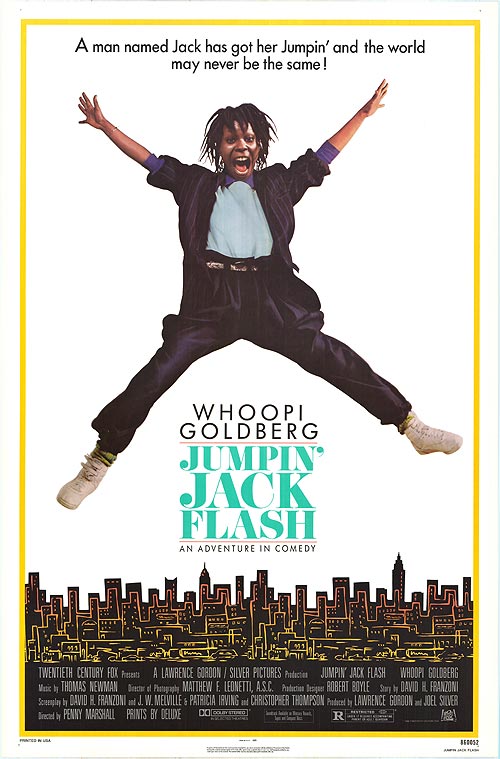
Also Bogle argues that Whoopi Goldberg is never allowed sexuality in her films and in particular in ‘Jumpin’ Jack Flash’ (Penny Marshall, 1986), there is no romance between Whoopi and the white man she saves, ‘in such films… so unattractively and absurdly dressed was she in oversized clothes or sneakers that she seemed defeminised’ (Bogle, 2001).  However this is Bogle’s opinion of what is unattractive and unfeminine and there is a counter-argument that would emphasise how progressive it is that women do not have to appear sexy in films to take the lead roles.

On the other hand there are films that have explored and shown black sexuality, mostly made by black independent filmmakers such as Spike Lee and Charles Burnett.  In She’s Gotta Have It (Spike Lee, 1986), the main character of the film is a black woman and the narrative is all about her relationships with men.  The film however touches on the idea of insatiability of black sexuality as the woman has three male lovers.  Nevertheless films like Killer of Sheep (Charles Burnett, 1977) ‘allow for the normalisation of the black character by valuing sexuality’ (Jones, 1993).  Similarly Guerrero (1993) argues that such a film ‘reconstructs the world on screen from black points of view cast in liberating images’.

An example of how black sexuality may not be controlled in Hollywood cinema would seem to be Lethal Weapon (Richard Donner, 1987).  Guerrero (1993) argues the film ‘contrasts the wise restraint of an older black cop… with the risk-taking, violent actions of his younger white partner’.  In this case the black character is the family man, the ‘buddy’ that is allowed a life and sexuality of his own that is even explored in the narrative.  Lethal Weapon also touches on the idea of black sexual insatiability again, with the black cop’s daughter developing a crush on the white ‘buddy’ played by Mel Gibson.  However Bogle sees something far more sinister happening in the film, arguing it ‘makes the black family acceptable for the mass white audience by carefully scrubbing it “clean” of too strong an ethnic identity’ (Bogle, 2001).  He then calls the 80s the ‘era of tan’, a time when Hollywood wanted people to forget the blackness of black stars.  Hence the family in Lethal Weapon is described as ‘a dab of black here, a dab of white there… a perfect composite tan’ (Bogle, 2001).  


This draws attention to the most common and worrying argument hinted at by many black critics.  It is in fact not black sexuality that is being policed in dominant cinema, but the black image and black culture that is restricted and controlled.  The conservative times that were the 80s lead to blacks being marginalised in all areas of the film industry, as Guerrero (1993) states, blacks ‘found themselves confronted with the “recuperation” of many of the subordinations and inequalities they had struggled so hard to eradicate’.  Bogle argues the backlash against counterculture and blaxploitation meant the subconscious goal of 80s films was to make ‘audiences believe such (rebellious) figures no longer existed or… they could really be tamed, disposed of, or absorbed into the system’.  This is clearly illustrated in 48 Hours when Murphy’s character Reggie chooses to go back into prison. 

It also seems there is a major contradiction in what some critics have written about the ‘buddy’ comedies.  Guerrero (1993) states that ‘Hollywood has deployed a variety of narrative and visual “strategies of containment” that subordinate the black image and subtly reaffirm dominant society’s traditional racial order’.  His first example of this is when a black star is given top billing in a film but is then isolated from any reference to the black world, as in numerous buddy films.  However he also states that ‘the buddy formula is able to attract the demographically broadest possible audience’.  Therefore the fact that black culture and sexuality is suppressed in these films is due to more than just the underlying racism in much of dominant cinema.  Hollywood’s sole goal is money, therefore having a black star and a white star sharing screen time is the most obvious way to pull in white and black audiences, and therefore maximise potential profits. 

The interracial buddy films can be seen as a fusion of blaxploitation action adventure films such as Shaft (Gordon Parks, 1971) and the all white male buddy pictures such as Midnight Cowboy (John Schlesinger, 1969) except with the black leads being relegated to sidekick or comic relief status.  Black sexuality is controlled in these films, but this is part of a much bigger effort to control and suppress black culture in Hollywood films.  This is proven by the 90s ‘hood movies which mainly represent African American culture as revolving around guns and drugs, bitches and hoes.  This also emphasises the point that black culture must be ‘sellable’ to white audiences and hence the packaging of black culture in many films with a singular black star.

BIBLIOGRAPHY
Guerrero, E. (1993) Framing Blackness: The African American Image in Film, USA: Temple University Press
Guerrero, E. (1993) The Black Image in Protective Custody: Hollywood’s Biracial Buddy Films of the Eighties In: Diawara, M. (ed.) Black American Cinema. London. Routledge
Jones, J. (1993) The Construction of Black Sexuality In: Diawara, M. (ed.) Black American Cinema. London. Routledge
Bogle, D. (2001) Toms, Coons, Mullatoes, Mammies and Bucks: An Interpretive History of Blacks in American Films. USA: Continuum
Jordan, W. (2000) First Impressions In: Back, L. and Solomos, J. (eds.) Theories of Race and Racism. London: Routledge
Yearwood, G. (2000) Black Film as a Signifying Practice: USA, AWP
Miller, C. (1996) The Representation of the Black Male in Film [online] Available from:  http://www.pressroom.com/~afrimale/miller.htm [Accessed 4th March 2004]

Friday, 31 August 2012

Must See Movie - American History X


Racist wackos don’t come any scarier than Edward Norton’s blistering performance as Derek Vineyard in Tony Kaye’s 1998 drama American History X.  Forget Russell Crowe in Romper Stomper or Stephen Graham in This is England, movie skinhead neo-Nazi thugs all bow to the superiority of Norton’s bulked up, wild-eyed, tattooed and terrifying Derek Vinyard.

The film is a beautiful but harrowing mix of style and substance with some of Kaye’s visuals coming across a tad over-stylised. Black and white is used for grim flashbacks while the slow motion and choral and orchestral soundtrack are perhaps slightly over used but never detract from the central performance from Norton. The visuals can be awe-inspiring, Norton’s unrecognisable physique all brawn and swastika-covered bulk. When director Tony Kaye hits the slow-mo, it’s impossible to take your eyes off the brutal thug even as he commits the most heinous of racially motivated violence.

The narrative is non-linear with regular flashbacks to Derek’s racist past being cut into the present day story of Derek’s return to his ruined family after a stint in prison for his inexcusable actions.  Derek’s little brother Danny (Edward Furlong in a rare but brilliant post-Terminator 2 role) narrates the story as he struggles to write a paper on his brother after being forced to re-write the assignment because his first draft was on Hitler’s Mein Kampf. 

We see Derek as a brutal but articulate and charismatic thug, rallying his troops, committing unspeakable brutality and slowly but surely corrupting the minds of his foolish followers and more worryingly, the impressionable young Danny. The film even dares to show the joy of being in a gang; the triumph of a team of white basketball players against their black rivals is filmed, scored and edited to show the lure of the racist culture to a young, scared white kid.

But in the later scenes, the audience gets to see why Derek has had a change of heart whilst in prison.  His desire to set Danny on the right path is fully justified by what he has experienced. And if you think that nothing could make you sympathise with such a vicious, heartless thug, think again.  Despite Derek’s disgusting behaviour that leads to his incarceration, you will feel for this guy by the time his old school principal (Avery Brooks) pays him a visit in the prison infirmary.

It is interesting to note that director Tony Kaye (mad as a bag of spanners by the way) tried to have his name removed from the project after Norton is said to have re-edited the film giving himself more screen time. Kaye wanted his credit to be Humpty Dumpty, but broke a Director’s Guild of America rule that would allow him to use the pseudonym. Despite these disputes, the film is a brutal, thought-provoking near-masterpiece. Norton gained 30 pounds of muscle to play Derek and his transformation from skinhead psycho to sensitive family man is handled with dexterity. If I was him, I’d have given myself more screen time too with a performance this visceral.

It is a film about hate and about the roots and causes of hate. It is about redemption and reversing wrongs. Like so many other films about hate and revenge, there is a cyclical theme to the violence and the hate. Danny notes near the end of the film that ‘hate is baggage’ and the film carries this baggage through to the tragic and painfully inevitable end. It is a bold conclusion, sure to be mis-read by a minority of the audience of this type of film. But to those with half a brain, it is a bitter lesson in the never-ending cycle of violence that spirals out of endless hatred.


Wednesday, 22 June 2011

Russia 88 (Pavel Bardin, 2009) Review

Synopsis: ‘Russia 88’ is a gang of fascist skinheads who roam the streets filming themselves being a right bunch of racist twats.


Continuing the filmic trend for charismatic psychos followed by sensation-seeking camera operators, Russia 88 successfully uses the mock-doc aesthetic to deliver its derivative but engaging narrative. Following in the footsteps of Man Bites Dog, The Magician and Behind the Mask: The Rise of Leslie Vernon, Petr Fyodorov plays Shtik, an angry, ranting lunatic who just loves having an admirer film his every move. Though not as memorable as Edward Norton, Stephen Graham or Russell Crowe’s terrifying performances as Nazi thugs, Fyodorov holds the movie being reminiscent of Colin Farrel’s early appearance in Tigerland.

While the pace lags at times due to the minimal plot, the last act of the film veers into predictable but vaguely silly territory after building up a strong sense of realism in the rest of the film. The handheld camera and other traits of the mock-doc format such as the voxpops with (real?) members of the public, direct address to camera and seemingly unedited material give the film a powerful feeling of watching the footage of a bunch of rhetoric spouting racist thugs keen to share their life and views with the world via the internet.

Like an anti-American History X, the film uses no fancy tricks like excessive slow-mo, black and white or orchestral and choir filled music, making the film feel more real and closer in tone and style to This is England. However there are also moments of humour (mainly in the first half of the film) where the mock-doc style is used to undermine and humiliate these characters who take themselves too seriously.

Briefly touching on what turns young men into Nazi’s, the film comes up with one or two interesting (if not very surprising) answers. The scene in a training camp may be a reminder of the hatred and indoctrination that is spawned in other training camps around the world and the use of voxpops and the constant references to the footage being put on the internet make this a very contemporary spin on the skinhead psycho cycle.
Overall, Russia 88 is filled with realistic detail but tries too hard to create a powerful and shocking ‘movie’ ending that feels out of place with the rest of the ‘documentary’ style. However Bardin may be a director to watch out for in the future.