The Survivalist is getting released in key cities and On Demand around the UK this weekend. I was lucky enough to see this post-apocalyptic drama at the 2015 London Film Festival. My review is up at Starburst Magazine. Here's a little taster:
Opening
with a simple red line that charts the exponential population growth
that occurred around the time oil production began, The Survivalist
offers a bleak new world after the collapse of civilisation when the
population has plummeted back down to sustainable levels again. We don't
get to see much of what this post-apocalyptic future is like, but we
see enough to learn that human nature hasn't changed a bit since the
dawn of man.
Martin
McCann plays an isolated loner who has settled in the woods and is
scraping a living by setting traps to catch anyone who comes near his
tiny farm. Here he is growing enough food to survive, and burning pages
of the bible to keep his bare hut warm. With no dialogue for a decent
chunk of the film, the titular protagonist goes through his daily
rituals, concentrating only on the basics of life; warmth, keeping clean
and making food. It is only when a starving mother and daughter arrive
and ask for food that his solitary existence is shattered.
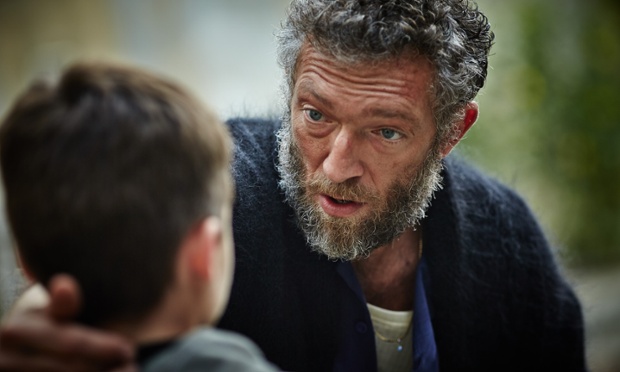
Partisan stars the legendary icon of La Haine, Vincent Cassel, and was screened at the London Film Festival in 2015. It will be in UK cinemas on Friday 8th January.
In
an ambiguous post-apocalyptic future (or alternative present), one man
is surrounded only by women and children, with the little boys around
him being trained to commit assassinations. This cult-leader-like figure
is a million miles from Mad Max's Immortan Joe, his wives and
War Boys and herds of souped-up vehicles hurtling across the Namibian
desert. It may seem a strange comparison but there is something familiar
between the Immortan cult of Fury Road and the Vincent Cassel-led cult in Partisan.
In the latest issue of Starburst Magazine, I have written a preview of Mockingjay Part 1 detailing everything we know about the upcoming blockbuster. I also have a review of The Equalizer and Kidnapped in there if you fancy picking up a copy from here or WHSmiths or HMV or many other places. Or you can subscribe here and never miss an issue!
Tired of the girls in YA adaptations having all the fun; why
not try The Maze Runner? Though Katniss may still wear the crown for the most
kickass protagonist in recent memory, it’s a testament to how far science
fiction has come that The Maze Runner feels currently refreshing for having a cast
of mostly male teens fighting and fending for themselves in a dangerous future
world.
Teen Thomas awakes to find himself being lifted into the Glade,
a beautiful green open space surround by the giant grey stone walls of an
impassable maze. With no memory of who he is or how he got into the lift, he is
immediately encircled by the group of wild boys who populate the Glade. There
is friendly leader Alby, big brute Gally, scrawny second in command Newt and a
younger fat kid named Chuck to name a few. The ‘Gladers’ have made a peaceful
and stable community for themselves under the leadership of Alby but Thomas’
entrance stirs things up between the boys, particularly as Thomas begins to
break the rules and heads into the maze without permission.
The Maze Runner is full of terminology invented for its
mysterious dystopian set up. The Lord of the Flies like tribe of boys are
divided into groups with only the ‘runners’ being allowed to into the maze to
try and map it and find a way out. In the maze, they meet partly mechanical
arachnid creatures known as The ‘Grievers’ who send the boys mad if they are
unlucky enough to be stung. Until Thomas arrives, no one has survived a night
in the maze as the doors close each night, giving runners only a limited time
to spend exploring the maze each day.
It’s a set up that wears its influences on its sleeves.
There is plenty of Lord of the Flies, a little splash of The Beach, and a
central premise highly reminiscent of The Cube. Not only that, but this film
version of James Dashner’s book looks like it owes a debt to more than a few
video games in its occasionally computer generated Doom-style aesthetic.
However despite its derivativeness, The Maze Runner feels fresh enough
(particularly no doubt to its younger target audience) to maintain attention.
Wes Balls’ direction and the screenplay and score zip along so that the film moves
at such a stunning pace, that even at nearly two hours, it never allows time
for ennui to set in, or for audiences to pick at the exposition heavy plot.
The mystery at the heart of this maze may not add up to much
but The Maze Runner has action aplenty. It is amazing how exciting the good old
fashioned sight of running can still be, even if occasionally the characters
are clearly surrounded by digital effects. The performances are solid with Will
Poulter particularly showing his range when compared to his performance in recent
comedy We’re the Millers and Dylan O’Brien making a decent hero, even if the
character of Thomas isn’t that interesting.
The Maze Runner sprints along, finding a way through its
myriad of influences to become something breezily entertaining, if not totally
satisfying by the time it reaches its end.
The Rover
sees a revolutionary performance from Robert Pattinson but as good as the young
heart throb is, he still remains in the looming shadow of Guy Pearce in this
gripping Australian drama from Animal Kingdom director David Michod.
Set 10
years after what is simply revealed as 'the collapse', The Rover follows
drifter Eric (Guy Pearce) who simply wants to get his car back after it is
stolen by a gang of desperate criminals. After giving chase, confronting the
men and losing them again, Eric comes across Rey (Robert Pattinson), the
mentally challenged brother of the leader of the group. With Rey wanting to
return to the brother who left him for dead, and Eric still out to retrieve his
car, the two men form an unlikely alliance as they take a road trip through the
barren landscape.
Along the
way, they meet an assortment of freakish characters who Eric either finds a use
for, or (if they get in his way) brutally dispatches. Eric is a man on the edge,
seemingly cold and psychotic but his dogged determination to get his car back
and his evolving relationship with the naive and wounded Rey reveal something
more to the man with a simple mission.
Guy Pearce
is sensational as the tormented, cold killer in The Rover. Whether being
utterly still and just watching his prey or stepping swiftly and assuredly into
action, Pearce is magnetic. Grizzled and unafraid of cold brutality or harsh
words, you don't need to know his exact motivations (only revealed in the final frames) to find him impossible to take
your eyes off. Pattinson impresses as the nice but dim Rey, all innocence
before some of Eric's cruelty starts to rub off on him. He is lanky, endearing
and with disgusting looking teeth, it is a highly welcome departure from
Pattinson's previous roles.
Michod, who
dealt with the Melbourne criminal underbelly so memorably in Animal Kingdom
creates a sweaty, grim, dusty and bleak world for his characters to travel
through. Though 'the collapse' is never explained the world appears fully
realised. Australia has attracted others from around the world, though
resources are scarce, the land is barren and the locals are a selection of mean
oddballs. As Eric questions the folks he meets, there aren't many that don't seem
worth one of his bullets.
There are plenty
of quick and shocking bursts of violence in The Rover and though the pace slows
almost to a halt on occasion, it builds to an unexpectedly emotional
resolution. The distorted, dirty score from Anthony Partos perfectly
complements the gritty visuals and moral mystery of Pearce's anti-hero. Even
with some lulls in the mid-section, The Rover opens and closes so strongly that
it is a ride well worth taking.
So the honeymoon wasn't all wildlife spotting, swimming, traveling, tropical rain, forest trekking, volcano climbing and hot springs dipping. In amongst all that, I got time for some serious sunbathing and reading too. I was worried that after so long of not following the latest movie news, I might get back and have nothing to blog about so I chose my reading materials carefully.
The three books I raced through in the 18 days I was away were:
It's Only a Movie: Reel Life Adventures of a Film Obsessive by Mark Kermode
The Film Club by David Gilmour
Robopocalypse by Daniel H. Wilson
All three are very good books and I would recommend each of them. I know lots of film bloggers worship Kermode but I find him to be pretty annoying and pretentious sometimes. I'm not sure if reading a book about a film critic is the most exciting thing in the world but Radio 1's celebrated film critic litters his prose with so many film references that it's hard for film fans not to enjoy.
What I really liked about It's Only a Movie is finding out about Mark Kermode's early career as a film journalist; how he got into writing and then radio and then television. It was also interesting to hear more about his love of horror. Many know him as the guy who won't shut up about The Exorcist but his passion for horror extends far beyond that classic of the genre.
Kermode and Herzog before the shooting
It's great to see a film critic getting to write a book about their adventures in film journalism but apart from the highlights such as the infamous interview with Herzog where the pair were shot at and Helen Mirren giving Kermode a good telling off at the Baftas, it's not an overly exciting read. Still, it's informative and entertaining enough for any wannabe film critic to give it a read. If you haven't seen Herzog get shot, check it out below:
My favourite quote from the whole book and one that I wish all filmmakers could read before they suggest that film critics are a complete waste of space is this:
'Despite my reputation for lambasting movies with a passion which borders on psychosis I remain genuinely stunned that anyone can ever get a film - any film - made at all. I've been on movie sets where I've witnessed the corpulent chaos of filmmaking first-hand and the sheer logistics of making sure everything doesn't go belly up on day one are mind-boggling'
David and Jesse Gilmour watching films
The Film Club is the true story of a film critic who lets his teenage son Jesse drop out of school as long as he watches and discusses three film's of his father's choice each week. This book is incredibly moving. Gilmour narrates the tale of watching his son growing up while they get to have their little film club three times a week, watching classic films like The 400 Blows, La Dolce Vita and The Bicycle Thieves to less demanding fare like Basic Instinct to downright crap like Showgirls.
Gilmour talks to his son with honesty, intelligence and emotion. Even when Jesse dabbles in cocaine and goes through heart ache with troublesome girlfriends, Gilmour is there for him, showing him great films and teaching him life lessons through the appreciation of those films. I found myself choked up on more than one occasion. I wish every boy could have a relationship with their father as open, honest and loving as this one.
Toby Young said of the book that it is 'an object lesson in how fathers should talk to their sons'. I can't recommend it highly enough!
Spielberg is directing the film adaptation of Robopocalypse for a 2014 release. Drew Goddard is writing the script but there have been no casting announcements yet. I thought I'd get in early and read the book before the film comes out and was not disappointed.
It is very similar to the book of World War Z in that it is an account from the perspective of many different characters of a significant and catastrophic event in human history. Instead of zombies though, this has a robot uprising. Like Skynet's rise of the machines, Robopocalypse has Archos, a super-intelligent computer that turns the machines against the human race.
It's going to make a brilliant film with it's action packed story and fascinating vision of the collapse of civilization when technology turns on us. The book is divided into five parts; Isolated Incidents in which the robots begin to show signs of freaking out; Zero Hour in which all hell breaks loose; Survival in which the survivors of Zero Hour get their shit together; Awakening and finally Retaliation in which you can probably kind of guess where the story goes.
While it is a really exciting and a cool dystopian vision of the future, it felt rushed and I think this book could have been like Stephen King's The Stand at around 1000 pages rather than around the 350 mark. I wanted each part to go on for much longer than it did. Also this book was a little better than World War Z in that there were some frequently recurring characters and it's always nice to have more of a thread and therefore characters that can you can start to care about.
That was my honeymoon reading. Anyone else read anything interesting recently? Have I convinced you to give any of these a try? Best of the bunch has to be The Film Club in my opinion. I recommend it to anyone, especially if you've got a few daddy issues. Next I think I'm going to read Ben Elton's Popcorn.
I love a disturbing vision of the future. In honour of The Hunger Games and it's tributes, districts, peacekeepers and televised battles to the death, here's my top 10 depressing movie dystopias.
But before I start, there are some films that are possibly disputed dystopian visions that need a mention here. The documentary Collapse features Michael Ruppert dishing out his version of what he sees as the future of the human race and it is disturbing and terrifying and I have not been able to forget it.
The Truman Show, A Clockwork Orange, Nineteen Eighty Four, The Running Man, Battle Royale and Series 7: The Contenders must also get a mention here. Some of these are clearly big influences on The Hunger Games.
But on to the main event. Here's my top 10:
10. The Road (John Hillcoat, 2009)
Viggo Mortensen and son trudge the road to nowhere in a grey, depressing future full of cannibal survivors of environmental devastation. Relentlessly grim and mournful, it's a bleak, miserable, whimpering end to the human race. And even the planet itself is dying in this post-apocalyptic misery-fest!
9. District 9 (Neill Blomkamp, 2009)
Not sure if this is actually an alternative present but it feels like a not too distant future as aliens have got themselves shipwrecked in the townships of South Africa and humans go about treating them in much the same way we've been treating each other for the last god knows how many years.
8. 12 Monkeys (Terry Gilliam, 1996)
Disease has wiped out 99% of the population of the planet and the remainder live underground and send convict Bruce Willis back in time to find out what caused the epidemic. Trippy, twisty, terribly clever tale of time travel that may not spend much time in it's terrible future but still has a big enough impact to make this list.
7. Planet of the Apes (Franklin J.Schaffner, 1968)
SPOILER! One of the best twists of all time. The planet of the apes is Earth! We've been overrun by talking apes and now we are slaves on our own planet. Of course this only becomes clear in the final moments of the film, but what a knockout ending and brilliant vision of the future.
6. Wall-E (Andrew Stanton, 2008)
Earth has become a (strangely beautiful) bin planet. The corporations have taken the fat, lazy human race into spaceships and left the Earth to little rubbish robots like our hero Wall-E. I'm not sure what's more frightening; the endless mountains of trash that cover the Earth or the depressing vision of what the human race becomes when they no longer have to get out of their seats anymore.
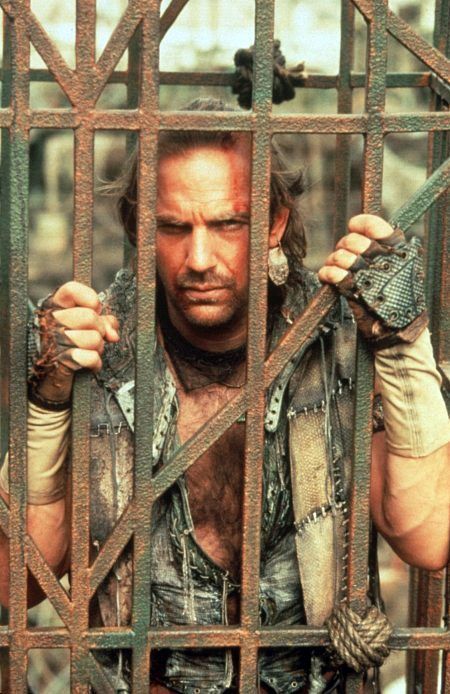
5. Waterworld (Kevin Reynolds, 1995)
Mad Max on water. Beginning with the flooding of the Earth by the melting of the polar caps, Waterworld takes us into a future where the human race live on floating atolls, terrorised by The Smokers with their oil tanker and jet ski's and mad leader Dennis Hopper. The sight of cities below the sea as revealed by the mutated hero (Kevin Costner with gills!) and the quest to find mythical dy land make this an exciting but worrying vision of the future.
4. Demolition Man (Marco Brambilla, 1993)
You can't swear, you can't eat red meat, you can't have sex and you have to use three seashells to wipe your ass. This is about the most joyless dystopia there is. Ok so everyone seems fine, there's no murder etc etc but this is a vision of a nanny state gone mad. So fortunately a killer from the past escapes which then requires a cop from the past to take him down. Denis Leary leads the underground revolutionaries and Stallone swears and fights his way to a showdown with Wesley Snipes' loony.
3. The Matrix (The Wachowski Brothers, 1999)
Humans have been imprisoned by machines. We're used as batteries and plugged into a grid that allows us to think we're living in the real world but actually it's a simulation created by the machines. The real world however is even worse. Those who have escaped the Matrix have to live in Zion, an underground hell of terrible raves and the constant threat of destuction from giant mechanical squids. Ignorance is bliss. Plug me back in.
2. The Terminator (James Cameron, 1984)
Only briefly glimpsed until Terminator: Salvation, this franchise created a similar vision to The Matrix. Technology has become our downfall with machines taking over and waging war on the human race. The resistance is led by John Connor but only if he can survive time travelling attacks on his mother in the 80s and then his teenage self in the 90s. Fortunately for every terminator the machines send back in time, the John Connor of the future has a saviour of his own to send back to save his former self.
1. Children of Men (Alfonso Cuaron, 2006)
The best dystopias are recognisable from the present. And they don't come any more recognisable than this. In the not too distant future, the human race has become sterile. Displaced immigrants are locked up and treated worse than animals in refugee camps by the sea. Bombings are regular occurences as terrorist organisations spring up. The human race is hopeless, obsessed with the youngest man on the planet who is killed in the first scenes of the film. Patriotism is encouraged by the powers that be, but the people are downtrodden, miserable and ready to give up. Only when Clive Owen hooks up with a miraculously pregnant young woman is there any sign of hope in this bleak vision of future England.
Now it's your turn! What are your favourite movie dystopias? Did anyone else like Michael Bay's The Island? Would The Hunger Games make your list?