Showing posts with label transformers. Show all posts

Saturday, 27 April 2013

Ethical Obligations in the TV and Film Industries


Ethical obligations are less likely to be required by law than contractual and employment legislation though they can be equally important as if a TV or film company does not behave ethically, there could be financial and legal repercussions. In my media classes, we have already looked at:


Codes of practice
A code of practice sets out how employees of a company may act. Though it is not legally binding, the purpose is to stop employees behaving in unethical ways, ensuring the creator of a piece of content behaves according to ethical standards. For example the BBC has a commissioning code of practice that sets out the principles by which they should abide when commissioning work from independent production companies. ‘The intention of the Code is to ensure that relations between the BBC and independent producers are conducted on a fair and transparent basis.’ The code includes guidelines for dealing with independent production companies and covers issues such as payment, editorial control and rights over the programmes. This ensures that the BBC has a good working relationship and behaves in an ethical manner with producers.

 Policies and procedures

TV and film companies will also have a number of policies and procedures in place to maintain and encourage ethical practice. These can relate to business conduct, recruitment, employment and records management. They are often informed by legislation such as health and safety and equal opportunities laws. One of the most interesting policies is the BBC’s on advertising. It states that advertising is not allowed in order to keep the channel free from commercial pressures. This means they can truly serve the public without having to make profits or have their schedules and programming dictated by external pressure. They also have a policy on the safeguarding of children that they work with in their programmes and also a watershed policy that ensures certain subjects, matters, issues and images are not on the channel before 9pm. These ethical policies make the BBC avoid legal action and give them a good reputation and standing in the country.

Emerging social concerns

A company’s ethical policies might extend to dealing with emerging social concerns such as the treatment of people with disabilities, the sexual exploitation of children and empowering youth. Channel 4 for example is committed to highlighting issues around those with disabilities. They broadcast the Paralympics and have commissioned a range of programmes dealing with disabled people and their lives. They also have documentaries under the Dispatches series that tackle and highlight a huge range of very serious issues including Britain’s sex gangs. These investigative shows fulfil ethical obligations to help the country improve.

Representation

Finally broadcasters will always consider the representation of social groups in their programmes. Channel 4 has come under fire for its representation of gypsy culture in My Big Fat Gypsy Wedding and also for its titling of a show about disabled people dating called The Undateables. These shows can damage the reputation of Channel 4 and lead to accusations of racism and making people’s perceptions of certain social groups worse or they can be praised for highlighting parts of culture that are not often represented on the television.


Similarly Hollywood blockbusters are also often criticised for characters that could be considered racist stereotypes. Paramount, Dreamworks and director Michael Bay were all criticised for Transformers 2’s racist caricature robots that sounded ‘black’ and could not read. Avatar and Fox also came under fire for casting African and Native Americans as aliens. However these huge blockbusters and their financial backers seem less concerned with ethical obligations as they still make huge profits even if a minority of people complain.

http://www.telegraph.co.uk/culture/film/film-news/6968020/Avatar-hit-by-claims-of-racism.html

Thursday, 18 October 2012

Feminist Analysis of Terminator 1 and 2


 Here's a look at the first two Terminator films taking a feminist approach.  This is for my BTEC Film Studies students who are currently writing up their own feminist analysis of science fiction films which I hope they will then turn into a blog post just like this!  It follows from yesterday's genre analysis of The Terminator.  Enjoy reading and please leave any feedback if you have anything to say about what has been written here.  After reading this, you may also find it interesting to read David Jackson's piece on why he thinks James Cameron is misandrist

The icon returns... as the good guy!
Feminism is a movement that began in the early 20th Century with the purpose of creating equal rights for women.  At this point, women were not allowed to vote and had very little opportunities for employment or even control over their own bodies.  Women were virtually possessions for their husbands and domestic violence was even more common than it still worryingly is today.  Feminists argued for women’s right to vote and for equal rights with men in the workplace and in the home.  They were advocates for methods of birth control becoming available so women could take more control of their own bodies.

Feminist film theory is important because films are such a popular and influential medium.  Feminist theorists are particularly concerned with the role of women in films and how they are represented.  They analyse films from a feminist perspective, looking specifically at the development and empowerment of women in narratives, the relationship between female characters, the male gaze and the idea of containment of women.

Help!
In The Terminator, Sarah Connor is firstly represented as a stereotypical damsel in distress figure.  She is the princess that needs to be rescued from the evil villain by a heroic male figure.  Kyle Reese is a soldier sent back from the future to protect Sarah from the Terminator.  Sarah is represented as a weak woman and she is employed as a waitress but finds it difficult as she is disrespected by the customers.  When the Terminator finds Sarah she is scared and feeling hunted as a strange man has been following and watching her.  This turns out to be Reese who than saves her by shooting at the Terminator.  Sarah is dragged around by Reese who continually saves her from death.  He is the character with knowledge in the story and he has to repeatedly tell Sarah what is going on.

Man strong, woman weak
As the story progresses, Sarah learns how to defend herself a bit more.  The male character teaches her to make bombs and how to use weapons.  Sarah is dependent on the knowledge and skill of the male character.  By the end Sarah has become the final girl, like in many slasher films as her protector has died trying to save her.  Even before his death, Sarah has become stronger and when Reese is injured she is the one that encourages him to keep going.  Finally when Reese dies, after injuring the Terminator, Sarah must fight back and gain her independence.  She crushes the Terminator despite her injury.

Literally contained
In Terminator 2, Sarah has been institutionalised because figures of patriarchal authority such as the police and doctors believe she is crazy. This is an example of containment.  Sarah is now a strong, independent woman and she has been locked up in a mental institution for it.  Sarah is first shown as strong and in control of her body and surroundings.  She has turned her cell into a makeshift gym so that she can do chin ups.  She is watched by a team of doctors like a dangerous caged animal.  She is resourceful and intelligent and almost escapes the hospital without any help.  When the Terminator arrives with her son, she is briefly relegated again to the damsel in distress role.

Tooled up
However throughout the film, Sarah is tough, good with typical masculine weaponry such as guns and determined.  Increasingly she becomes more dependent on the Terminator as he is stronger and virtually indestructible.  In the final scene where Sarah confronts the villain, it is the ‘male’ Terminator who must finish the job when Sarah runs out of bullets.  Therefore Sarah’s position in the film becomes less prominent as the male characters become increasingly important.  On a few occasions she is actually a hindrance to the mission and has to be told to calm down and remain focused by her ten year old son.

Feminists would find the representation of women in the film to be progressive in the lack of a male gaze set up in the films.  The idea of the male gaze suggests that women are often objectified and sexualised by male screenwriters and directors.  Women are often filmed to emphasise their attractiveness to the male audience and the viewer is often positioned to look at women as if they are a male character staring at the woman’s body.  Sarah Connor is never a sex object, although in the first film there is a sex scene where her bare breasts are visible.  However for the most part, especially in the second film, Sarah is not dressed in sexualised clothes and the camera does not linger on her body or her appearance.

The male gaze
On the other hand, in Transformers and the sequel, Mikaela Banes is played by Megan Fox and is constantly dressed in revealing clothes such as short skirts and tight tops.  Though she is quite a strong character who displays knowledge of car mechanics and gets to fight alongside the heroes in the final battle, she is also objectified as she leans over a car and then a motorbike in the sequel.  The camera tilts up her body showing us the reaction of the male character as he looks at her.  The audience is invited to identify with the male hero as he enjoys the look of the female character.

The Fox
The notion of containment is also central to feminist film theory.  Often strong female characters have to be contained by the men who write and direct Hollywood films.  Even though Thelma and Louise for example try to break free of social norms, they have to kill themselves at the end of the film in a last act of defiance.  Similarly strong women are often contained by the patriarchal idea that they must be mothers.  In films from Kill Bill to Aliens to Terminator 2, the female heroes of the story are strong because they are protective of their offspring or because they take the role of a surrogate mother.  Sarah Connor is only important because she gives birth to the leader of the human resistance in the films.  Her role as mother is the most important thing about her.  She is fighting to protect her son John Connor so that he can grow up to save the human race in the future.  Her caring nature as a mother figure also means that she fails in an assassination attempt later in the film.  When a child pleads with her to not kill his father, Sarah breaks down and cannot continue in her actions.  Again, she is saved by the male characters that come to help her.

Mummy you're so badass.
This is a common way for screenwriters to assert patriarchal ideology over strong female characters.  Sarah Connor is also literally contained at the start of Terminator 2 because she has tried to fight the system and figures of authority have deemed her insane.  She is even licked by a male nurse as a reminder to the audience that she is a woman and therefore vulnerable and targeted by men.  However it is only with the help of male characters that she can break free of this containment.

Kicking ass for kids.
From looking at the Terminator films, it is clear that feminism has had an effect on the narratives and ideology of many Hollywood films.  Science fiction of the 1950s did not have tough female characters as heroes and the damsel in distress was a far more common character type.  Women were much more likely to scream and run and be the victim of the villain whereas Sarah Connor shows resourcefulness, intelligence and some independence and strength.  Many female heroes are still objectified such as in Tomb Raider and Resident Evil but there are more progressive roles for women in action, horror, and science fiction cinema than there used to be.

Can I get a hug?

Sunday, 12 June 2011

Superheroes must die!

Maybe I’m getting old. Maybe it’s just because I never liked comics. But is it me or are there just way too many superhero movies these days?

I confess I’ve never read comics. I read books or I watch films. Reading with pictures just ain’t the same as it was when I was a kid. I tried. I read one graphic novel, generally considered a classic… ‘Watchmen’ and guess what… I much preferred the film! The ‘novel’ was long, complicated and for me, just not very engaging.

So what blockbusters have we got to look forward to this summer? Thor, X-Men: First Class, Green Lantern, Captain America: The First Avenger. All superhero flavoured, comic book madness. Give me Transformers 3 over this lot anytime.

The thing is I too get excited by all the hype surrounding these films. I read the features in the magazines, I gawp at the trailers and I even go and see a fair few of them expecting to get my mind blown and face melted.
Unfortunately time and again I’m disappointed. I blame X-men. Like so many others back in 2000, I went along to see it at the cinema because the critics were raving. Bryan Singer was directing. He made ‘The Usual Suspects’. Surely it would be good. But I felt nothing. The action and big climax were too filled with ridiculous looking special effects. The costumes were kind of cool and the cast were top quality but the film was totally unmemorable (to me). It goes in my eyes and gets crapped straight back out, barely registering on my brain.

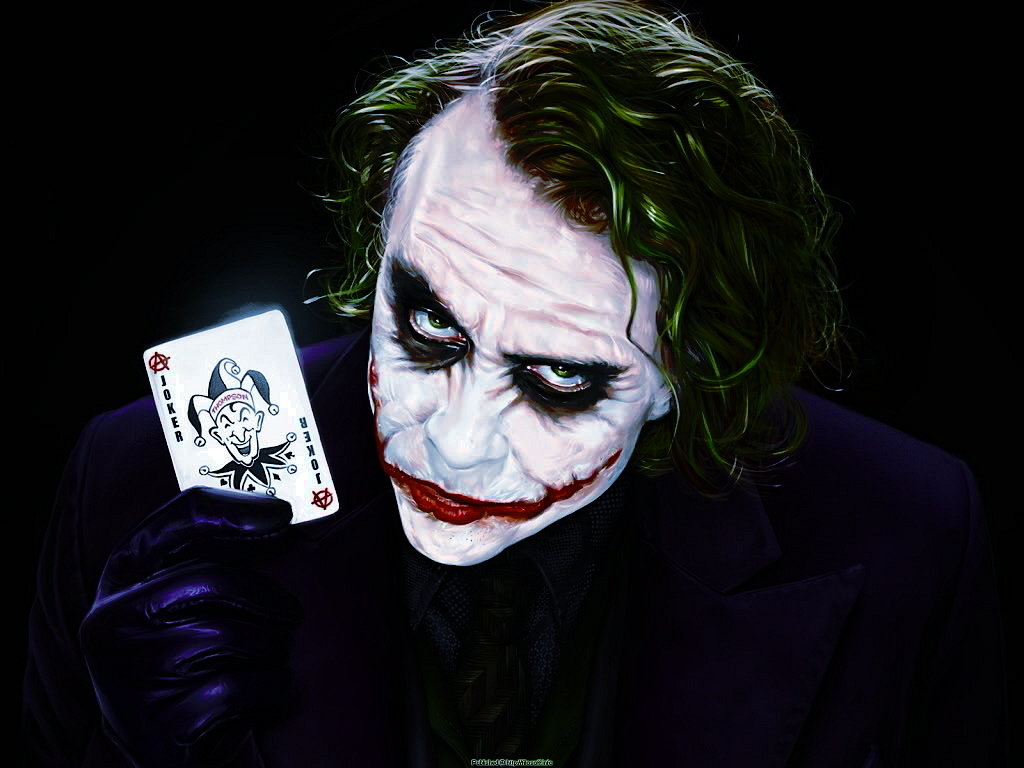
As a kid I’d enjoyed Tim Burton’s Batman films and the Superman series but I think even then I preferred the Batman TV show with Adam West. This brings me to an exception. The Christopher Nolan Batman films have registered on my brain. I thoroughly enjoyed seeing Bruce Wayne throw his wallet away to discover what it was like to have nothing. I loved Heath Ledger as the Joker and truly believe that even if he hadn’t died people would still be banging on about that performance. Great films… great director. Real adult themes and a distinct lack of ridiculous looking special effects.

There’s too damn many for me to go through all the comic book movies of the last ten years. Some critics have argued that we (mainly America) needed these fantastical heroes to save us from a post-9/11 depression. Most people just see these movies making bags full of money for greedy studios who can’t believe their luck! Stories that have already been written. The visuals storyboarded. Characters already created and fans already waiting. Fantastical super powers that can now be created with CGI. Easy money!

Don’t get me wrong… some of these characters are interesting. Iron Man and Hellboy were particularly enjoyable due to their funny and likeable main characters. Kick-Ass and Super give us hip new spins on the superhero genre. But for every cool character there’s always going to be a fair few Daredevil, Elektra, or Ghost Riders.

Now the studios are even starting to reboot the franchises that are barely a decade old. X-men, Spiderman and Superman are all getting a fresh coat of CGI and the paint has hardly dried on the last batch. Seriously do we really need another lot ALREADY???

These comic book/superhero blockbusters aren’t even taking over the top tens of highest grossing films of the summers. In 2002, only Batman Begins and Fantastic Four made it. In 2003 only X-men 3 and Superman Returns made it. But then in 2004 and 2005, the top spots were filled by Spiderman 3, Iron Man and The Dark Knight. Bringing it right up to date… in 2009, only the Wolverine spin off film hit the top 10 highest grosser list and in 2010, Iron Man 2 beat competition from original works like Inception and Despicable Me.

If you love comics and you love the movies and I’ve offended you to your very core, then I’m very sorry. But look at the blockbusters I got to devour as a kid in the 80s. Aliens, Back to the Future, The Terminator, E.T., Ghostbusters, Die Hard, Beverly Hills Cop. And the 90s… Titanic, The Matrix, Speed, Forrest Gump, Robin Hood: Prince of Thieves, Toy Story! Give me these beauties any day over the next buffed up pretty boy in tights and a screaming damsel girl next door.

So despite the pretty trailers for the coming summer’s superhero antics, I’m going to vote with my wallet. If YOU want to see more originality or even just more sequels to interesting, exciting, not overdosed on silly special effects movies, then don’t be lured by the trailers! Remember you’ve seen it all before! You’ll forget it in a week (if not less).