The man who composed one of my all time favourite movie soundtracks has passed away. RIP James Horner. You will be missed. And thank you so much for creating this. It was the perfect complement to an incredible film.

Showing posts with label titanic. Show all posts
Showing posts with label titanic. Show all posts
Tuesday, 23 June 2015


Wednesday, 5 June 2013
Active Spectatorship: The Relationship between Audiences and Films Part 1
Films can have a huge amount of effects on audiences from simply causing an emotional response to some would argue much worse effects such as causing copycat violence. Audiences however can also affect a film and particularly the longevity of its popularity and its status in our culture. Audiences are made up of individuals however and it is impossible to say that a film will have the same impact on every single viewer and also that a film will be read or understood by each viewer in the same way. It is a complex relationship that deserves further exploration. Over the next couple of weeks I will be looking at active spectatorship, the pleasures of film watching, the effects of films, fandom, different viewing experiences and things that affect our interpretation of films.
Active vs. Passive Spectatorship
One
of the fundamental debates in media theory is over whether audiences are made
up of individual active spectators or a passive mass of unthinking consumers
who watch what we are told to watch and fail to question what we are told or
the messages of the media we consume. Active spectatorship theory suggests each
viewer is different and many people in the audience will question the film and
react to it in different ways to others, not just blindly accepting the
messages. Active spectators do not just consume what they are told to watch by
marketing that is aimed at them but instead choose different films to watch for
different reasons. The passive spectator theory on the other hand suggests we
are all the same and our intelligence, life experiences and everything else
that makes us individuals does not affect our reception of the film.

Perhaps it can be argued that some
filmmakers try to turn the audience into passive spectators by filling their
films with very obvious, unambiguous preferred readings. Others wish to
encourage active spectatorship by making their films more open to individual
interpretation and making it easier for people to read the film differently and
respond to it in different ways. A preferred reading is where the producers of
the text encode it with meaning using various codes such as music, lighting and
cinematography in order to try and get as much agreement over the meaning of
the text as possible. It is made very clear how the filmmaker wants the
audience to think and feel about the characters, story and events in the film.
Blockbusters generally have a clear preferred reading, so for example in
Titanic when the protagonist Jack dies there is very sad music on the
soundtrack and he is played by Leonardo DiCaprio who audiences are very
familiar with. Everything about the way the scene is shot, edited and scored
makes everyone (mostly) in the audience agree that it is sad that Jack has died.

On the other hand some other films
encourage spectators to be more active and to have to think about how to feel
and respond to the film. For example Pulp Fiction is told in a non-linear
fashion and so the audience has to construct the real chronology of the story
in their own head. The film does not have heroes and villains either. There is
very little that tells the audience how to feel at certain times or what to
feel about certain characters. Spectators think for themselves about whom to be
sad about if they die or even who is the main character of the story. Similarly the ending of Memento leaves the viewer with a great deal of ambiguity about how to feel about the protagonist. The reverse chronology and the revelations in the final scene reveal that the character is somebody quite different to what the audience had been previously led to believe and it takes a very active mind to decide how to feel and interpret the film by the final scene.
Next up in part 2, I will be looking at the many different pleasures of film watching.
Check out the rest of the posts in this series:
Check out the rest of the posts in this series:
Part 2 on the pleasures of film watching.
Part 3 on frameworks of interpretation.
Part 4 on media literacy and intertextuality.
Part 5 on the effects of film.
Part 6 on fandom.
Sunday, 7 April 2013
Remembering Roger Ebert
Beloved film critic Roger Ebert died on April 4th 2013 at the age of 70 after a long battle with cancer. I have written an In Memoriam piece on the late, great critic Roger Ebert over at Filmoria.
President Barack Obama said 'Roger was the movies'.
His wife Chaz said 'the world has lost a visionary and a creative and generous spirit who touched so many people all over the world'.
He had just announced the day before his death his intention to slow down after writing '306 movie reviews, a blog post or two a week, and assorted other articles' in 2012 alone.
I didn't grow up reading Roger Ebert's reviews like so many others. I was well aware of Siskel and Ebert, if not just because The Bloodhound Gang had that lyric 'Yes I'm Siskel, yes I'm Ebert and you're getting two thimbs up'. Check it out:
But I did occasionally check out his reviews and most often enjoyed them. I didn't always agree with them obviously but when he got it right, he really nailed it. I'm going to share a couple of my favourites:
On Titanic: 'Movies like this are not merely difficult to make at all, but almost impossible to make well. The technical difficulties are so daunting that it's a wonder when the filmmakers are also able to bring the drama and history into proportion. I found myself convinced by both the story and the saga.'
On City of God: It 'does not exploit or condescend, does not pump up its stories for contrived effect, does not contain silly and reassuring romantic sidebars, but simply looks, with a passionately knowing eye, at what it knows.'
On Trainspotting: 'It uses a colorful vocabulary, it contains a lot of energy, it elevates its miserable heroes to the status of icons (in their own eyes, that is), and it does evoke the Edinburgh drug landscape with a conviction that seems born of close observation.'
On Terminator 2: 'T1000, as played by Patrick, is a splendid villain, with compact good lucks and a bland expression. His most fearsome quality is his implacability; no matter what you do to him, he doesn't get disturbed and he doesn't get discouraged. He just pulls himself together and keeps on coming.'
On Schindler's List: 'What is most amazing about this film is how completely Spielberg serves his story. The movie is brilliantly acted, written, directed and seen. Individual scenes are masterpieces of art direction, cinematography, special effects, crowd control. Yet Spielberg, the stylist whose films often have gloried in shots we are intended to notice and remember, disappears into his work. Neeson, Kingsley and the other actors are devoid of acting flourishes. There is a single-mindedness to the enterprise that is awesome.'
We certainly didn't agree on Fight Club which Ebert called 'the most frankly and cheerfully fascist big-star movie since Death Wish' and a 'a celebration of violence'but his review is a brilliant teaching tool and I'm sure to always read it with my students when we discuss the film.

Anyway please go check out my proper In Memoriam piece on the late, great film critic Roger Ebert over at Filmoria.
What was your favourite Roger Ebert review?
President Barack Obama said 'Roger was the movies'.
His wife Chaz said 'the world has lost a visionary and a creative and generous spirit who touched so many people all over the world'.
He had just announced the day before his death his intention to slow down after writing '306 movie reviews, a blog post or two a week, and assorted other articles' in 2012 alone.
I didn't grow up reading Roger Ebert's reviews like so many others. I was well aware of Siskel and Ebert, if not just because The Bloodhound Gang had that lyric 'Yes I'm Siskel, yes I'm Ebert and you're getting two thimbs up'. Check it out:
But I did occasionally check out his reviews and most often enjoyed them. I didn't always agree with them obviously but when he got it right, he really nailed it. I'm going to share a couple of my favourites:
On Titanic: 'Movies like this are not merely difficult to make at all, but almost impossible to make well. The technical difficulties are so daunting that it's a wonder when the filmmakers are also able to bring the drama and history into proportion. I found myself convinced by both the story and the saga.'
On City of God: It 'does not exploit or condescend, does not pump up its stories for contrived effect, does not contain silly and reassuring romantic sidebars, but simply looks, with a passionately knowing eye, at what it knows.'
On Trainspotting: 'It uses a colorful vocabulary, it contains a lot of energy, it elevates its miserable heroes to the status of icons (in their own eyes, that is), and it does evoke the Edinburgh drug landscape with a conviction that seems born of close observation.'
On Terminator 2: 'T1000, as played by Patrick, is a splendid villain, with compact good lucks and a bland expression. His most fearsome quality is his implacability; no matter what you do to him, he doesn't get disturbed and he doesn't get discouraged. He just pulls himself together and keeps on coming.'
On Schindler's List: 'What is most amazing about this film is how completely Spielberg serves his story. The movie is brilliantly acted, written, directed and seen. Individual scenes are masterpieces of art direction, cinematography, special effects, crowd control. Yet Spielberg, the stylist whose films often have gloried in shots we are intended to notice and remember, disappears into his work. Neeson, Kingsley and the other actors are devoid of acting flourishes. There is a single-mindedness to the enterprise that is awesome.'
We certainly didn't agree on Fight Club which Ebert called 'the most frankly and cheerfully fascist big-star movie since Death Wish' and a 'a celebration of violence'but his review is a brilliant teaching tool and I'm sure to always read it with my students when we discuss the film.

Anyway please go check out my proper In Memoriam piece on the late, great film critic Roger Ebert over at Filmoria.
What was your favourite Roger Ebert review?
Sunday, 3 March 2013
Where Music Videos and Movies Meet
Another common purpose of music videos is to help sell a film that the song appears in. Here are some of my annoying, exciting and downright depressing examples:
Armageddon and Aerosmith: I Don't Wanna Miss a Thing
Love how this one takes on some special significance as lead singer Steven Tyler is effectively singing it to his daughter Liv Tyler who appears in the movie Armageddon. I also love the way the clips from the film are used with Aerosmith appearing on all the screens being watched by the characters. And the use of the rocket blast as an excuse to have the band having their hair blown dramatically around is cheesy genius! Liv Tyler crying over her father in the film played by Bruce Willis but actually replaced by her real father on the screen is the icing on the cake!
Ill Manors and Plan B: Ill Manors
This one is interesting not just because it is a bleak, violent and sensationalist look at modern British youth culture but also because although it is the title track from the film of the same name, it does not actually feature any footage from the film. Instead some of the actors/characters pop up in the music video and it is set in the same kind of locations as the film. It also deals with the same themes as the film with its look at disaffected youth running riot.
Robin Hood: Prince of Thieves and Bryan Adams: (Everything I Do) I Do It For You
This one stayed at number one in the pop charts for sixteen consecutive weeks back in 1991 which was a record. It no doubt helped that Robin Hood was also doing well at the box office, showing that a song and a film can help each other towards greater sales. I always enjoyed the video just for getting to see the little clips of the film but wasn't so much of a fan of the bits of Bryan Adams all dressed in denim with his own band of merry men playing in the woods.
Titanic and Celine Dion: My Heart will Go On
You can't keep a good ballad down and certainly not if it's featured in one of the biggest films in history. Not a big fan of the song or the video but it's great to see clips from the film. Celine Dion croons from the bow of the Titanic and beneath the stars but for me this video is just an opportunity to see Jack and Rose again!
Men In Black and Will Smith: Men in Black
A great example of synergy at work. Will Smith sings the song, stars in the movie and Sony produce both the film and the soundtrack meaning that one helps sell the other. Sony's music making division helps promote its film production and vice versa, meaning Sony get very rich from using different parts of their business to promote other parts. Simples! The music video uses the cast, locations, special effects, costumes and clips of the film, making it probably relatively cheap to produce.
TV does this too with The Rembrandts' music video for I'll Be There for You being a perfect example that helped to sell Friends as a brand new sit-com by featuring the stars of the show pratting about in a studio with the band.
There's many more examples. What are your best and worst?
Armageddon and Aerosmith: I Don't Wanna Miss a Thing
Love how this one takes on some special significance as lead singer Steven Tyler is effectively singing it to his daughter Liv Tyler who appears in the movie Armageddon. I also love the way the clips from the film are used with Aerosmith appearing on all the screens being watched by the characters. And the use of the rocket blast as an excuse to have the band having their hair blown dramatically around is cheesy genius! Liv Tyler crying over her father in the film played by Bruce Willis but actually replaced by her real father on the screen is the icing on the cake!
Ill Manors and Plan B: Ill Manors
This one is interesting not just because it is a bleak, violent and sensationalist look at modern British youth culture but also because although it is the title track from the film of the same name, it does not actually feature any footage from the film. Instead some of the actors/characters pop up in the music video and it is set in the same kind of locations as the film. It also deals with the same themes as the film with its look at disaffected youth running riot.
Robin Hood: Prince of Thieves and Bryan Adams: (Everything I Do) I Do It For You
This one stayed at number one in the pop charts for sixteen consecutive weeks back in 1991 which was a record. It no doubt helped that Robin Hood was also doing well at the box office, showing that a song and a film can help each other towards greater sales. I always enjoyed the video just for getting to see the little clips of the film but wasn't so much of a fan of the bits of Bryan Adams all dressed in denim with his own band of merry men playing in the woods.
Titanic and Celine Dion: My Heart will Go On
You can't keep a good ballad down and certainly not if it's featured in one of the biggest films in history. Not a big fan of the song or the video but it's great to see clips from the film. Celine Dion croons from the bow of the Titanic and beneath the stars but for me this video is just an opportunity to see Jack and Rose again!
Men In Black and Will Smith: Men in Black
A great example of synergy at work. Will Smith sings the song, stars in the movie and Sony produce both the film and the soundtrack meaning that one helps sell the other. Sony's music making division helps promote its film production and vice versa, meaning Sony get very rich from using different parts of their business to promote other parts. Simples! The music video uses the cast, locations, special effects, costumes and clips of the film, making it probably relatively cheap to produce.
TV does this too with The Rembrandts' music video for I'll Be There for You being a perfect example that helped to sell Friends as a brand new sit-com by featuring the stars of the show pratting about in a studio with the band.
There's many more examples. What are your best and worst?
Thursday, 11 October 2012
I Love That Blog Post #13
Here is a selection of some of the great stuff I have been reading around the blogosphere recently. I hope you will drop by and give them a look sometime!
The Droid You’re
Looking For has the goods on the real life scumbag that Scorsese’s next film is
all about http://tdylf.com/2012/09/12/who-is-jordan-belfort-and-why-is-martin-scorsese-making-a-movie-about-him/
Check out
Impassioned Cinema’s must-see Video of the Week: Alma.
Stick with it for a brilliant ending!
http://www.impassionedcinema.com/votw-alma/
Fogs takes a
detailed look back at one of my all-time favourites and a film everyone should
see: Titanic http://fogsmoviereviews.com/2012/09/17/movies-that-everyone-should-see-titanic/
The Droid You’re
Looking for has the twenty signs that you’re a movie geek http://tdylf.com/2012/09/26/twenty-signs-that-youre-a-movie-geek/
On Page and
Screen has an excellent review of the American Psycho book http://eclecticbooksandmovies.blogspot.co.uk/2012/10/book-review-american-psycho-by-patrick.html
Behind the Couch has
a great piece on surely the gayest horror film ever: A Nightmare on Elm Street
Part 2: Freddy’s Revenge http://watchinghorrorfilmsfrombehindthecouch.blogspot.co.uk/2012/10/a-nightmare-on-elm-street-part-2.html
Fogs takes a look
at another movie that everyone should see: Seven http://fogsmoviereviews.com/2012/10/01/movies-that-everyone-should-see-se7en/
Useful tips from
My Filmviews on how to increase traffic and comments on your blog http://myfilmviews.com/2012/10/05/blogging-tips-to-increase-traffic-and-comments/
Monday, 9 July 2012
Are James Cameron’s Movies Misandrist, and What Would he Hope to Gain if They Were?

Before I begin, there are two things I’m
going to need to tackle. The first thing is that I actually really enjoy most of director James Macaron Cameron’s output (apart from
Titanic, but that doesn’t mean it will escape comment!). You may have read my outright praise for Aliens in the past. His plotlines and dialogue are elegant and
functional, and the action scenes which drive his movies are hyperkinetic
without being incomprehensible. There’s a lot going on, but he can hold a
camera still for a few seconds rather than chucking it across the room a la Transformers.
The other thing is what misandry is. I’m
sure you’re all familiar with its counterpart, misogyny – the hatred of women –
and all the notions that go with it, such as objectification (treating women as
objects primarily for the pleasure of the so-called ‘male gaze’). Misandry, it
follows, is the hatred of men. What could its possible equivalent to
objectification be? Some people would say that hyper-masculine, hyper-muscular
male figures are there for women to look at, but a Feminist would be partially
correct in dismissing that as a male-manufactured power fantasy. But did you
ever wonder why it’s a power fantasy? Because power gets you laid and,
statistically speaking and apart from socially important lotharios, bigger and
more aggressive men get more girls. Ask yourself, whether you be a man or a
woman, how many women have you met who claim to actively prefer puny or fat
guys? Are you such a woman yourself? Don’t lie, because I’ll know. And I will find you.
The masculine equivalent of objectification
of women – if the argument for it being a problem for women acts as a kind of
denial that it could ever happen to men, which is an utter lie – is something
I’m going to have to semi-invent a term for. That term is ‘agentification’. An
agent is someone or something who actively influences the world around them.
How is this bad? It becomes bad when I offer you the following definition –
‘the treatment of men as agents who act primarily for the benefit and gain of
women’. As with the objectified female, the thoughts, feelings and personality
of the agentified male are considered irrelevant.
Our culture has even had a platitude which
reflects this for hundreds, if not thousands of years – ‘man is defined by his
actions’. It is an attitude so deeply entrenched in our culture that we take it
for granted and it has ceased to be a problem. Think about it – surnames in
most cultures are subject to patrilineal transmission, from father to son. Type
that into spellcheck. Patrilineal doesn’t exist. But matrilineal does. Why is
this? Hmm. I digress. Surnames are patrilineal in most cultures and what do you
notice? Potter. Smith. Farrier. Wright. Turner. And so on. All names derived
from jobs. A man is what he does – not how he thinks or feels. You don’t get
Mr. Sympathetic or Mr. Likesicecream. Of course, if Bruce Wayne had a son,
according to occupation-derivation he would be Mr. Batman, which would give the
game away just a tad. If a man’s surname doesn’t come from his job (i.e it
sounds posh) it is generally an aristocratic derivation referring to some place
his family owned i.e De Montford.
Back to the problem. It is the problem that
makes young men enlist in militaries and die for countries that don’t care
about them. It is the problem that makes men aged 16-24 the absolute
statistically-proven prime victims of violent crime, even though culturally we
harp on about how at risk women are. It is the problem that means that the
human race today is descended from half as many men as women, which means that
throughout our evolution males have consistently been killed off twice as fast
as females. But this is all okay, of course. This is because it is their choice
(although, if they don’t make such choice, they lose their masculine agency and
are less likely to be considered for breeding rights. Evolution, baby). The
notion that this is okay is firmly supported in many of James Cameron’s films –
but in what ways, and why?
I will start with Avatar as the most obvious culprit, and attempt to do it in
summary. At its heart, this movie presents a male-driven military industrial
complex (the baddies) against a female Gaia-type earth-spirit, Eywa (the
goody). The milindust complex is led by the snarky (and physically slight)
corporate bigot Parker Selfridge and the scenery chewing Lt. Col. Miles
Quaritch. The irony is that although Quaritch is nominally the villain, he is
decisive, self-sacrificing and lives up to his word which the ‘hero’ Sully is
largely unable to do. Sully’s main motivations for turning against the military
that employed him? His new blue body lets him walk, and helped him get a hot
blue girlfriend. The hot blue girlfriend part is critical to this discussion.
So how is the above so critical? Sully is
portrayed as stupid, bland and selfish – he betrays pretty much everyone.
Despite constant verbal abuse and disdain from his soon-to-be-girlfriend
Netyri, (“She calls me ‘skown’ which means moron”) he still falls in love with
her. He starts off on the wrong side, and betrays his new blue buddies. What
redeems him? Two things – that he acts upon the instructions of a female
(Netyri) for the benefit of a female earth-spirit, and that (as a masculine
agent) he tames ‘Last Shadow’ which is essentially a huge and deadly pterosaur.
The fact that he is accepted back as a saviour under these circumstances amuses
me – suddenly, all the Na’vi trust him. It is very much like me leaving in
shame driving a Fiat Fiesta and becoming a hero just because I drive back in a
Mercedes Benz. His feelings do not matter, the fact that he is stupid does not
matter, the fact that his motivations are skewed does not matter. He is the hero
because he did something cool to impress a girl.
 |
| Don't laugh mate - you die in 45 minutes' time. |
Let’s examine the other male figures now.
Sully’s main competitor is an arrogant blue dude called Tsu-tey who basically
dares to expect a woman who had already pledged herself to him to be faithful!
What a goddamn crime! How does the movie absolve him of this terrible crime?
Twofold – by having him become subordinate to the ‘hero’ (who is in turn
subordinate to Netyri’s genitals), and die heroically assaulting the bomb
shuttle. The good old disposable male strikes again – Cameron leaves no trope
behind.
 |
| Killed by your own tree, FFS! |
The two tribal leaders can be compared,
too. The patriarchal leader – who wants to kill Sully – is ignobly disposed of
via a spare of wood when hometree is blown to bits, while the matriarchal
figure, who saves Sully (stereotypically nurturing - how ironic) is spared. Ho
hum.
How
do men and women in the milindust complex compare? Little better. All the
background female figures who remain loyal to the army have close-cropped hair
like their male colleagues, while the heroic female pilot (Trudy) who turns
against her employers has lovely long hair. As a strong, assertive man,
Quaritch is put in a position where the audience is not meant to sympathise
with him despite the fact that he’s the only consistent and trustworthy
character with any power in the whole damn film. His female adversary and
equivalent, the scientist Grace Augustine, whose name is just a face-palm
worthy pathetic fallacy, is a total bitch to everyone. But the film tells us to
like and respect her – so a behaviour changes from wicked to respectable
depending on whether a man or a woman does it. In a meritocratic, equal
society, we should judge people’s behaviour, not their sex. Cameron’s hypocrisy
here clearly sees him judging sex. Shouldn’t a (pseudo) Feminist avoid
employing the supposed tactics of the patriarchal enemy?
Anyway, Doctor Elegant Majestic wilfully
pounds down on her subordinates Norm Spelman and Dr Stereotype Patel. These are
the two token consistently loyal and pleasant men in the film, but they are
both portrayed as nervy, nerdy, back-seat taking somewhat asexual blobs. Norm
is even a drooler, apparently as Grace tells his Avatar, “Norm, you’re getting
your saliva in the samples” in response to his lisping dialogue. So, Jim,
you’re saying that we should be confirming the stereotype that nice guys are
chumps, but bad guys can be redeemed if they subject themselves to the will of
a woman while retaining their ability to act and take risks. That’s just
fucking great man – game over man, game over.
 |
| "Not if I kill you first, Jim!" |
Now, on to a summary of how this works in
his other movies. In both Terminator
films, male (or masculine-bodied protagonists such as the T-800 in Terminator 2) exist to protect the
female and her offspring and then die. Kyle Reese gives her offspring, protects
her, then dies. The T-800 gives the thumbs up as he commits suicide or ‘self-terminates’.
As the T-800 is referred to as the ultimate father figure at several points
throughout the movie, the implications are sinister. Mother-of-the future Sarah
Connor says, “watching John with the machine, it was suddenly so clear. Of all
the would-be fathers who came and went over the years, this thing, this
machine, was the only one who measured up. The Terminator would never stop. It
would never leave him. It would never hurt him. It would never shout at him or
get drunk and hit him. Or say it was too busy to spend time with him. And it
would die to protect him. In an insane world, it was the sanest choice”. Ideally,
men are just self-sacrificing machines that exist only to help females and
their young. What they make of it is meaningless. What they feel is moot. But
we are not permitted to see them as victims of agentification.
 |
| He's just DYING to help out! |
The creator of Skynet, Miles Dyson, is on
the other hand a male who neglects his family in favour of his work and needs
to be shown the error of his ways by a woman. He dies redeeming himself in
staying behind at Cyberdyne to detonate the bomb intended to wipe out Skynet’s
future. Can you see a pattern developing here?
In The
Abyss, proto-Augustine superbitch Lindsey Brigman appears and makes a fool
of her ex-husband, Virgil. He makes his transition from immature layabout to
hero only once he accepts that his ex-wife is right about the aliens being
benevolent. The villain of the piece is unsurprisingly a male soldier -but he’s
played by Michael Biehn, so I’m automatically on his side. Corporal Hicks and
Kyle Reese are good-guys!
In Aliens,
Ellen is a mother-figure who essentially adopts the little girl Newt / Rebecca.
Carter Burke, the primary villain, is the proto-Selfridgian corporate stooge.
The nice guys, Corporal Hicks and android Bishop are both horrifically injured
in the service of a woman. They accept this humbly, despite the fact they got
hurt as the result of said woman taking a massive risk (trying to save someone
from alien impregnation) which she had previously disapproved of herself (“You
can’t help them! You can’t! Right now, they’re being cocooned just like the
others”). Yet the risky hypocrisy displayed by Sully is shown to be just fine
when Ripley does it. No-one needs to redeem her – her actions redeem themselves
in the narrative. Granted, it is the only grave error in her otherwise sterling
leadership.
 |
| So Jack and Rose get married and - nah just messin wit ya. HE'S FUCKING DEAD! |
In Titanic, Jack dies to save Rose. Oh
yeah, ‘Women and children first’. I forgot.
All of his men are put-up, shut-up,
define-yourselves-by-your-actions types who become defined as heroes in their
services to women. Self-serving men are villains, self-serving women are
frequently sympathetic protagonists. His films are frequently hypocritical and misandrist
on this level. True Lies is the only
one I can’t figure out.
 |
| Do as I say! Not as I do! |
But why does James Cameron keep doing this
in his films? I don’t think he really believes any of this stuff. It’s all
sinister marketing. Knowing that just making a kick-ass action movie won’t be
enough to bring in the big dollars considering that some – though not all – of
the female audience will be hesitant about seeing it, Cameron essentially
enshrines women in order to put bums in seats. Does he believe in this ‘natural
order’ in real-life? He is on his fifth marriage. Former wife Linda Hamilton,
who ironically played the heroine Sarah Connor in both Terminator movies, is on-record as describing being married to him
as “terrible on every level, he was terribly insecure that I was going to ruin
it for him somehow,”(The Week Uk, March 3rd
2010) and that - in another blazing
irony -implied he was much like Miles Dyson in that he was single-mindedly
focused on his work to the detriment of his family relations. It is also
suspected that he cheated on Hamilton with current wife Suzy Amis. None of this
is secret, libellous or revelatory – just have a look on Google. You can make
your own judgments as to whether he has anywhere near the respect for women he
pretends to have in his films.
What does this all mean? Look at it all
from this angle, and his movies are pick-up artists. These movies are the
sleazy guy in a nightclub who sidles up to a woman and says ‘all these other
guys are horrible. You should sleep with me. I’m nice. I understand. I’ll look
after your interests. Come with me if you want to live’. Well, to paraphrase
the awesome and now sadly perished female-fronted alt-rockers Lush: You say
that women are superior to men? Well, I know the score – and I’ve heard it all
before.
ABOUT THE AUTHOR

David M. Jackson is a lecturer in English
Language and Literature as well as Sociology, so he’s seen your retorts to this
article coming from a mile away and frankly they’re bloody feeble. Don’t even
start – you don’t want to see him get out of this chair.
When not teaching or beaming smugly from
this hallowed webpage, he works on making his ‘about the author’ blurbs
shorter.
By the way, he wrote a novel about a
cybernetically augmented police officer struggling to maintain her humanity
while seeking revenge for her father’s death against the backdrop of civil war
in happy ol’ Britain. It’s called ‘Fidelity, Bravery, Integrity’ - which you
may find a bit ironic. It’s out on Sunday 1st July 2012 via Amazon, priced at £3. Keep your
wallet handy – there’s more to come.
Friday, 6 July 2012
2012 Releases Ranked: Top 10
Yesterday I listed the nine less good films of 2012 here. Because I'm a useless critic and enjoy most films I see and would hate to give any competently made, mildly entertaining movie anything less than 5/10, there have been no real stinkers for me yet! I have about a hundred others I still need to see but will be waiting for the rental. Without further ado, this is my top 10 of 2012 so far. Please click the titles for more of my drivel:


8. Michael 8/10


6. Carnage 8/10


What do you think? Am I stuck in the 90s putting Titanic as the best film of 2012? Have I got a fetish for woods with Hunger Games and Cabin so high up the list? Or maybe I've got a thing for the Hemsworth brothers? Is Chronicle really better than Avengers? Is anything better than The Avengers? Is this whole list pointless with the impending rise of the Dark Knight?
Monday, 7 May 2012
Meeting an Oscar Winner: Peter Lamont
 |
| Lamont with Sir Ken Adam |
My Dad fixes computers for a living. Why does that matter here? Because he fixed the computer of Oscar winning production designer Peter Lamont recently! This is the guy who has worked on 18 Bond movies from Goldfinger in 1964 right up to Casino Royale in 2006.
Not only that but Peter Lamont has also worked with the legendary James Cameron on three films; Aliens, True Lies and Titanic, the latter being the only film Lamont has won an Oscar for, despite other nominations.

So my Dad gave me Mr Lamont's number so I could arrange to have a chat with this titan of film production. And this Thursday I sat down with him and spent two hours questioning and worshipping him. I wanted to do a formal interview but thought that might be a bit pushy for a first meeting so settled on just asking him questions for my own personal pleasure.
I spent a couple of days researching everything I could about him and here's some of the cool stuff I found out:
1. Both his brother Michael and son Neil work in the industry. His son Neil Lamont worked as an art director on all the Harry Potter's, a couple of Bonds and recently War Horse. His brother Michael sadly passed away fairly recently.

2. 'Peter Lamont worked as a print boy runner at Pinewood Studios and
returned after military service as a junior draftsman to ascend through
the art department ranks. Art director Peter Murton introduced him to
the James Bond series in which he would establish his reputation, first
as a draftsman on "Goldfinger" (1964), making drawings of the famous set
for the interior of Fort Knox. Lamont then worked closely with two-time
Oscar-winning production designer Ken Adam on another fantastic set
construction--the incredible volcano rocket base in "You Only Live
Twice" (1967). He earned his first Academy Award nomination for his set
decoration on Norman Jewison's "Fiddler on the Roof" (1971)'
http://www.tcm.com/tcmdb/person/107725|124090/Peter-Lamont/
3. Lamont graduated to production designer on "For Your Eyes Only" (1981)
http://www.tcm.com/tcmdb/person/107725|124090/Peter-Lamont/
 4. James Cameron said "I always assumed that the style I had shot Titanic in would work well in 3D
because I tended to use wide lenses and I let the environment - the ship, the
sets, the beautiful production design that Peter Lamont did - kind of wrap
around the characters and inform the story at every step"
4. James Cameron said "I always assumed that the style I had shot Titanic in would work well in 3D
because I tended to use wide lenses and I let the environment - the ship, the
sets, the beautiful production design that Peter Lamont did - kind of wrap
around the characters and inform the story at every step"
http://blogs.coventrytelegraph.net/thegeekfiles/2012/04/james-cameron-indicates-five-y.html
5. Some of his work is on show at the James Bond Art and Design Exhibition in London from July-September alonside others work. 'Highlights include gadgets and weapons made for Bond and his
notorious adversaries by special effects experts John Stears,
Syd Cain and Chris Corbould; artwork for sets and storyboards
by production designers Sir Ken Adam and Peter Lamont and costume
designs by Bumble Dawson, Donfeld, Julie Harris, Lindy Hemming,
Ronald Patterson, Emma Porteous, and Jany Temime'
http://www.cinemaretro.com/index.php?/archives/6579-JAMES-BOND-ART-AND-DESIGN-EXHIBITION,-LONDON,-JULY-SEPTEMBER.html
6. 'Lamont has only missed three Bond films in total – the
first two, Dr. No and From
Russia With Love were made before
he joined the team and he was absent from Tomorrow
Never Dies because he was already committed to another film' http://www.mi6-hq.com/sections/articles/bond_21_peter_lamont_interview.php3
7. The reason he missed Tomorrow Never Dies was for James Cameron's Titanic.

8. Peter Lamont said about his time on the Bond films 'they are nice people
to work with and we do get a free hand. And there’s a great feeling that we
are all on the same team trying to do the very, very best. My
edict is that when I do second best I’ll give up' http://www.mi6-hq.com/sections/articles/bond_21_peter_lamont_interview.php3
9. He also worked on a film I loved as a kid called The Taking of Beverly Hills. Anyone else seen this?
10. He's also featured quite a lot in the opening 30 minutes of the feature length Making of Aliens. I've put the video below. You can read a full interview with Peter Lamont here.
 |
| That is an ACTUAL Oscar and I held it! |
He also showed me his copy of a brand new Titanic book that has been published to tie in with the 3D release. The he showed me a 2 inch thick folder of photos, plans, and paperwork from the production of the speedboat chase in Live and Let Die. Absolutely amazing piece of cinema history! I was in awe!
I can't embed the chase scene but if you don't remember it, check it out here:
http://www.youtube.com/watch?v=-3cEF5wfk0o
 |
| Engraved bit of Oscar- poor photo sorry! |
I asked him his favourite Bond film and he said The Spy who Loved Me but his favourite Bond was Pierce Brosnan.
I had also noticed that he was quoted repeatedly in this month's Empire magazine in the article about the famous dam-jumping opening of Goldeneye and so took that along with me to get him to sign it. Mr Lamont seemed so interested in the article that I left my copy of the magazine with him so that he could read the article in his own time. A small price to pay for getting to meet such a legend! And anyway I got him to sign my 4-disc Titanic special-edition DVD instead!
I leave you with a quick video featuring Peter Lamont talking about the Grand Staircase set from Titanic.
What a legend!
Tuesday, 1 May 2012
April Round-Up: Part 2
Welcome back! Just to be unconventional, here's my top 11 films of April! If you missed the bottom 11, please click here.
11. Salmon Fishing in the Yemen (Lasse
Hallstrom, 2012)
Fortunately this is not the world’s dullest
documentary. It’s actually an ok film
about faith with a bit of romance. Review
here.

10. The Vanishing (George Sluizer, 1990)
Pretty ridiculous tale of a man obsessed
with finding out what happened to his vanishing girlfriend. The lengths this guy finally goes to are
absurd but do lead to a brilliantly bleak ending.

9. The Night of the Hunter (Charles Laughton,
1955)
The kids aren’t alright. They’re being chased by a lunatic. A classic that stands the test of time... mostly. In many ways this is way ahead of it's time. I could see them remaking this quite effectively but they would be hard pushed to find someone to beat Robert Mitchum's eerie performance. I never realised just how huge a homage Spike Lee was giving this film with the Radio Raheem Love Hate speech in Do the Right Thing.

8. Lars and the Real Girl (Craig Gillespie,
2008)
Or Ryan Gosling and the surprisingly
understanding community. When an odd but pleasant chap brings home a blow up doll, the community goes along with his declaration that she is a real person. It's a sweet and sympathetic film that relishes in the goodness of people. Therefore it's hard not to like.

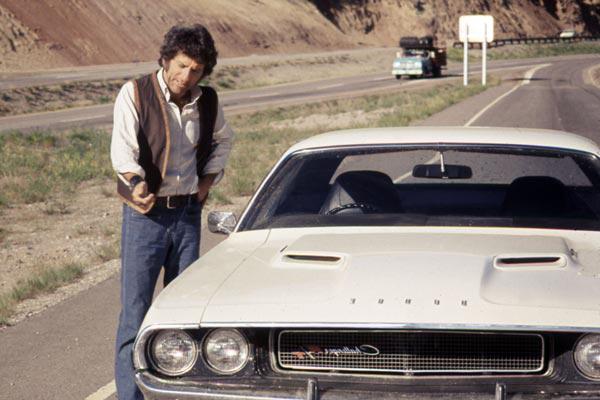
7. Vanishing Point (Richard C. Sarafian, 1971)
Like Easy Rider but with just one guy and a
car. The death of the sixties never
looked so cool or so exciting. Great car
action, a naked girl on a motorbike and an outstanding soundtrack. Existentialist cinema at its best.
6. A Night to Remember (Roy Ward Baker, 1958)
And a film to remember too. James Cameron bought the rights to this
before making his ‘version’ and clearly took notes from this impressive
production.

5. The Day After (Nicholas Meyer, 1983)
One hour into this drama you have a
spectacular series of explosive shots that send this film spiralling down into
chaos and calamity. It then turns
harrowing and unforgettable. An important
film.

4. Tomboy (Celine Sciamma, 2011)
A beautifully observed slice of life about
a little French girl who just wants to be one of the boys. Really well observed and engaging. Features absolutely perfect performances from it's young leads, particularly the titular tomboy. A little bit heartbreaking but also incredibly inspiring.

3. 21 Jump Street (Phil Lord, Chris Miller,
2012)
Laughed my ass off. Haven’t seen so many dick jokes in a film for
awhile but when they’re this funny, who am I to complain? The sequence when the two protagonists take
the new recreational drug of choice had me laughing harder than I have in a
film for a long time. Side-splitting, and totally irresponsible
stuff.

2. Cabin in the Woods (Drew Goddard, 2012)
Plays with horror conventions while playfully mocking the horror movie audience.
Smart, funny and probably even cool for non-horror fans. See review here.

1. Titanic 3D (James Cameron, 2012)
Ok so it's not a new film but it has been upgraded and I did see it in the cinema. Still unbelievably epic. I have lost absolutely no love for this film and it was a great experience to see it while being very aware that the Titanic was on its voyage 100 years ago to that very night. The 3D works brilliantly in places and not so
great in a few others. Nevertheless my heart
will go on for this and you can read why here and here. I’ll never let go
Jim Cameron. I’ll never let go.

To top it all off, I am in the process of arranging a meeting with legendary production designer Peter Lamont of Titanic and Bond film fame. You can be sure I will be blogging about this if I make it happen.
So what do you think of my list and rankings? Should the infamous Human Centipede 2 have been top of the list? Is it unfair to put Titanic 3D as number one? Am I clinically insane? How come I don't rate old films as high as new films? What have you seen from this list and what's your favourite?
Subscribe to:
Posts (Atom)