Showing posts with label 28 days later. Show all posts

Saturday, 17 January 2026

Wait till you see what Ralph Fiennes gets up to in The Bone Temple

Ralph Fiennes' performance in The Bone Temple is worth the price of admission alone. There is a scene in this film which is so delirious, OTT and frankly quite joyous despite the circumstances of some the characters that I was convinced I was seeing one of the best scenes of the year and it's only January. 


I watched a double bill of 28 Years Later and The Bone Temple and it was great to see them back to back as they do feel like two halves of a whole. I liked 28 Years Later a lot more on this second viewing. I find it to be quite an impressively odd, experimental sort of film. The score by Young Fathers feels brilliant in some places and strangely out of place in others - but it consistently feels very Danny Boyle though. The much discussed cinematography is also very distinct. It's got that cool new way of capturing the kills with the iPhones setup but also the focus/depth of field in some shots is very striking. I still wish it was scarier.  There is nothing like the end of 28 Days Later where Cillian has to cope with deranged soldiers and the Infected. The decision in 28YL to bring a terminally ill person to the mainland is bonkers, but it worked better on this watch, and I found it much more affecting this time. Alfie Williams as Spike really is excellent. Fair play to Aaron Taylor-Johnson for playing such a dick, but fair play to Alex Garland for not making him completely one dimensional - there is a good Dad in there probably, but not much of a good husband. Fiennes' Dr Kelson is still the standout, and even moreso in The Bone Temple.

What an absolute blast this film is. There is a scene where Jack O'Connell and Ralph Fiennes finally meet that is absolutely bonkers. It's all far less experimental than 28 Years Later, but with the Jimmys and developments in the Kelson/Samson relationship, this is still a pretty strange film. Low on scares, but someoretty damn nasty stuff all the same. Jack O'Connell and Fiennes are both absolutely exceptional. I wish the Jimmys had a bit more to do and had been utilised more scarily come he climax, but I still can't wait for the next one.

Ralph Fiennes deserves some kind of award for the Iron Maiden scene. Absolutely wicked.

Thursday, 24 December 2015

28 Days Later: In the House, In a Heartbeat


London is a hectic place. Normally filled with more traffic and pedestrians than seems humanly possible, people crammed this close together tend to get edgy. What if a terrifying virus got unleashed that turns the inhabitants of the UK into rage fuelled running zombie monsters known as the ‘infected’? Before imagining the UK as a green and pleasant isle of wonder for the opening ceremony of the London Olympics, Danny Boyle cleared the streets of London to envisage a truly shocking zombie apocalypse.


Recently roused from a coma, bicycle courier Jim (Cillian Murphy) checks himself out of a deserted hospital and finds London completely empty. The bustle of the city is dead, left only with an eerie stillness. This is what London will look like when the apocalypse comes. Desolate, forsaken and forgotten. The survivors are hiding out of sight. The Infected appear from nowhere like rabid dogs intent only on attack. The film later has Jim and other survivors shop in empty supermarkets and travel down empty motorways all in search of an army base that promises hope. But when the world goes to hell, is it really the army we should be turning to for help?

John Murphy’s entire soundtrack is a master class in atmospheric horror scoring, but as all hell breaks loose at the climax of 28 Days Later, his In the House, In a Heartbeat climbs to an explosive crescendo over six minutes of beautifully shot, visceral violence. 


Our three surviving characters (a man, a woman and a teen girl) have dodged death at the hands of rage infected super-zombies, only to find themselves in the ‘safety’ of an army base populated by aggressive male soldiers who have a scary attitude to women.

As hero Jim escapes the soldiers’ clutches and begins a rage-fuelled rampage with the help of some unleashed Infected, Murphy’s music builds and builds; quiet and calm at first with just two piano notes, then joined by mounting acoustic guitars and climaxing with drums crashing, electric guitar pounding and the visuals on screen becoming more and more terrifying as the deadly mixture of frightened soldiers, vicious Infected and one angry protagonist face off in the confines of the dark mansion. This is music to gouge out eyes to.

Listen:

Wednesday, 9 December 2015

Before Steve Jobs: A Danny Boyle Retrospective


Director Danny Boyle's latest film Steve Jobs (read my review here) may not have set the box office alight (currently sitting at a $24 million gross off a $30 million budget), but it has been a hit with the critics and should snaffle a few big awards over the coming months. You never know quite what you're going to get next from Danny Boyle, as a look back at his wonderfully varied career shows.


Starting out in TV movies, mini-series and episodes of Inspector Morse from 1987 to 1993, it took Danny Boyle’s gripping debut feature Shallow Grave in 1994 for anyone to take notice of the mild-mannered Northerner before he would go on to become a national treasure last year. His career has gone from the controversy baiting Trainspotting about a group of Scottish junkies to be being the pride of Britain with his stunning marvel, the London 2012 Olympics Opening Ceremony. With Trance about to hit cinemas, we take a look at just what it is that makes Danny Boyle the best of British.

Danny Boyle’s debut feature film arrived in 1994 with the frenetic, energetic and deeply dark Shallow Grave. Putting Boyle and McGregor close to being on the map rather than slap bang in the centre; it nevertheless introduces many of the themes, stylistic traits and collaborations that would colour Boyle’s career. From its opening voiceover (not nearly as cool as Trainspotting’s) to its mistrust between friends, betrayal over a suitcase full of money and its collaboration between director Boyle, writer John Hodge, producer Andrew Macdonald and star Ewan McGregor, there are many signs of great things to come.

Three friends sharing an apartment in Scotland find a new housemate to join them in their spare bedroom. After spending his first night there, the new guy drops dead leaving a suitcase stuffed with cash for the three friends to decide what to do with. When they decide to dump the body and keep the cash, things turn swiftly sour. Greed, betrayal and brutality soon follow as gangster types show up for the lost money and the three friends finally turn on each other. Boyle’s mobile camera is wonderful to watch, the soundtrack pulses and Ewan McGregor and Christopher Eccleston bring two very different characters to the central triangle, leading to a thrilling and clever final act.


However 1996 was the year that Boyle really got noticed. Trainspotting is his masterpiece, based on the book by Irvine Welsh and telling the tale of Scottish junkies trying to kick the habit; failing, fucking and finally trying to go straight after one big score. Ewan McGregor stars as Renton but the ensemble cast of Ewan Bremner as loveable Spud, Robert Carlyle as psychopath Begbie, Johnny Lee Miller, Kelly Macdonald, Kevin McKidd and Peter Mullan are all on finest form. Working again with writer Hodge and producer Macdonald, the filmmaking triumvirate produce the most iconic and best British film of the 90s.

Renton and his ‘buddies’ should be despicable low lives but Boyle and his collaborators keep all these junkies believable and most importantly sympathetic… except maybe Robert Carlyle’s mini-madman Begbie. It was accused of promoting heroin chic, a fashionably scrawny look still modelled by Kate Moss, and of glamorising heroin use. It does neither, giving a brutally honest account of the degradation and danger of heroin addiction but still managing to give some character’s an almost happy Hollywood ending. The soundtrack, the ‘choose life’ monologue and the iconic marketing not only put Boyle on the map but also Britain and set McGregor off on his journey to Star Wars.
odge and Andrw Hodge

How can you follow a film like Trainspotting? Unfortunately it’s very difficult and some might say you just can’t. Boyle took the lure of Hollywood dollars with his next production; keeping McGregor, Hodges and Macdonald in tow but producing the ambitious, surreal but fatally flawed misstep that is A Life Less Ordinary. Released only a year after the success of Trainspotting it was bound to be a disappointment but even on its own terms this tale of angels and kidnapping fails to elicit much of a response, emotionally or intellectually. It feels rushed, miscast and too silly for its own good. Cameron Diaz joined the cast as a spoiled rich girl who allows herself to be kidnapped by Ewan McGregor’s loveable oaf, but the chemistry, the comedy and the supernatural interference of two of Heaven's angels fail to gel and offer a satisfying whole. If there is one film in Boyle’s career to avoid, this is it.


Three years later Boyle returned with another shot at the blockbuster; this time starring Leonardo DiCaprio in a role that was promised to Ewan McGregor but then snatched away due to studio interference. It caused a riff between Boyle and McGregor that is rumoured to have only recently been resolved. It’s also a huge shame as Boyle’s adaptation of Alex Garland’s incredible book The Beach feels like one big bucks compromise after another. Richard, the hero of the book, is British and would have been a better fit for McGregor and his unrequited love for the girl he couldn’t have is a high point of the novel. Instead the film makes the most of Leo’s heartthrob status and has him shagging his away around the beautiful, idyllic island hideaway of the title.

Lots of Boyle’s fun and funky stylistic traits are there and Leo isn’t bad as Richard but the film had a huge mountain to climb to be anywhere near as brilliant as the book. Shooting in Thailand and making the most of beautiful locations, the ending was also changed from the novel in an exciting direction. More interestingly, the collaboration between Boyle and McGregor came to a close, but it opened the door to a new collaboration.


After the critical shrug towards The Beach, Boyle retreated to television to complete a couple of television movies in 2001. Feeling refreshed and ready to take on a feature film again, Boyle resisted the studios and offers of big budgets and decided instead to film a zombie movie that would redefine the genre forever. 28 Days Later marked his second collaboration of sorts with writer Alex Garland. Whereas Garland wrote only The Beach novel with Hodges penning the screenplay, 28 Days Later was Garland’s first film script.

Featuring Cillian Murphy (who would later appear again in Sunshine), 28 Days Later is the story of a virus that spreads throughout Britain turning people into blood-spewing rage-filled savages, the Infected. Giving the zombie genre a vital shot in the arm by unleashing basically what amounted to sprinting, extra-terrifying zombies, its digitally shot, low budget thrills are just what the British horror film needed and also sent Boyle in a new direction, sticking with lower budgets to enhance his creative and bold visions. 28 Days Later feels like Boyle back to his roots; low budget, British characters and setting, gritty, brutal, but stylish and subtly commercial enough to attract the American audience. It also marked the start of his collaboration with director of photography Anthony Dod Mantle that would continue through Millions, Slumdog Millionaire, 127 Hours and Trance and his collaboration with composer John Murphy that would make more music together through Millions and Sunshine.

Sticking to home turf, a small story and returning to a narrative that spins around an ill-gotten bag full of money (see also Shallow Grave and the final act of Trainspotting), Boyle’s next film introduced him to the wonders of working with children, which he would again do in Slumdog Millionaire. Millions feels a little like an anomaly in Boyle’s career though. It is the utterly charming and completely surreal tale of two little boys who come across a large amount of money as Britain prepares to convert to the Euro. It’s alt-universe where England has decided to go with the common currency is far from the strangest things about it. One of the little boys sees saints everywhere and even converses with them. There is a strong spiritual element throughout with stars in the sky, a pivotal nativity play and Jehovah’s Witnesses all featuring heavily.

Though that all might bring back unwelcome memories of A Life Less Ordinary and its not so heavenly angels, Millions is far smarter and more surreal, but also much more emotional than Boyle’s earlier misfire. Its ending is completely bonkers but Millions is worth a look to see Boyle at his weirdest. Incredibly, it manages to balance family drama and laughs and with smart scripting and intelligent themes.

In 2007, Boyle returned to Alex Garland for his next script, the science fiction scorcher Sunshine. Infinitely smarter than many examples of the genre, it’s not quite Danny Boyle’s 2001: A Space Odyssey but it is an outstandingly shot, edited, scored and special effects dependent intellectual blockbuster. Though it may sound more like Michael Bay than Stanley Kubrick with a crew of scientists sent to kick start the dying sun with a nuclear weapon, it is smarter than the average mission to save the Earth stupidity.

With its beautiful and haunting score from John Murphy, incredible special effects and gorgeous cinematography, it is worlds away from anything Boyle had directed before, despite the presence of Cillian Murphy, returning after their collaboration on 28 Days Later.


Danny Boyle’s next two films were both written by Simon Beaufoy, the writer who until then had been best known for The Full Monty. Slumdog Millionaire and 127 Hours were both adaptations of books, something Boyle had not attempted since the success of Trainspotting and the relative disappointment of The Beach. Slumdog Millionaire gained Boyle real international recognition and acceptance as it scooped eight Academy Awards. Its success not only reflected Boyle’s incredible directing talent but also the spot on selection of his collaborators from Anthony Dod Mantle’s cinematography to Beaufoy’s screenplay to his editing and music teams.

Slumdog Millionaire also confirmed Boyle as a director at his best working with budgetary constraints and with a vibrant culture to capture and put up on screen. His work with the young Indian non-professional actors recalls his eliciting of wonderful performances from the boys in Millions.

Boyle then took restraints to new limits with his adaptation of Aron Ralston’s incredible survival tale Between a Rock and Hard Place. Sticking James Franco down a canyon and trapping him under a rock for 127 Hours meant the real star of the film was not just Franco and his desperate, determined performance but also Boyle’s signature kinetic style. For a film so limited to one location (and a claustrophobic one at that), 127 Hours is a speedy, zippy, film-making tour de force with whizzing camerawork, split screens and choppy editing all amounting to a highly emotional and cathartic cinematic journey.


It is not only a great tale of survival, like a real-life Saw film, but 127 Hours also brings together many of the themes of Boyle's film career to date. From Trainspotting’s opening sprint through the Edinburgh streets set to Iggy Pop’s Lust for Life, Danny Boyle has created memorable characters whose life-affirming stories really do show a strong desire to survive from Renton kicking heroin to Ralston cutting his own arm off. There are elements of the spiritual present with Franco’s hero finding hope in premonitions of his future son. Angels, saints, hope and visions of paradise have all featured in Boyle’s films of the past and Ralston is forced to question his morals and values while trapped in the canyon. Danny Boyle’s films have always questioned moral choices over money, drugs and the value of human life.

He is a director who has traversed genres like few others. Not content with this, Boyle recently directed his own version of Frankenstein at the National Theatre and quickly and conscientiously silenced the cynics by putting on one of the greatest Olympic Opening Ceremonies the world has ever seen.

Trance sees him work with James McAvoy, Rosario Dawson and Vincent Cassel for the first time in a trippy art-heist thriller that also sees him reunite with writer John Hodge and director of photography Anthony Dod Mantle. With the news that the long-awaited sequel to Trainspotting will now be arriving in 2017 with the original cast intact, it looks as though Danny Boyle’s lust for a life in filmmaking is set to continue long into the future. 

Thursday, 22 January 2015

Ex Machina Review and Alex Garland Interview for Starburst Magazine


Here is my review of one of the first must-see movies of 2015, Alex Garland's Ex Machina. I was stupidly excited for this seeing as Alex Garland is the author of my all time favourite book The Beach and also the screen writer of one of my favourite horror films, 28 Days Later. Thankfully Garland's directorial debut did not disappoint! Check out my review by clicking on the link above.


I also got to interview Alex Garland for Starburst. I was supposed to get 20 minutes talking to him by phone but unfortunately only got 12 minutes which meant I had a huge amount of questions I was still desperate to ask! Never mind... it was still a privilege. Check out the interview by clicking above.

Check out Starburst Magazine for more.

More interviews from I Love That Film

More reviews from I Love That Film

Saturday, 23 March 2013

Director Retrospectives: Part 2 Danny Boyle

In the continuing series of director retrospectives over at Filmoria, my latest is on the career of British director Danny Boyle, ahead of the release of his new film Trance. I'm seeing Trance tomorrow at a preview screening and cannot wait! It's got James McAvoy, Rosario Dawson and Vincent Cassell and looks like it might be a hypnotic blast. Early reviews are looking very good, no surprise after Danny Boyle wowed the world with the London Olympics Opening Ceremony last year!


 In advance of some of the biggest and best film releases of 2013, Filmoria writers are all contributing retrospectives of many directors' work. We have all chosen six directors who have films being released in 2013 and the idea is that in the week leading up to the new film, we will write and publish a retrospective look at that director's body of work.


The six directors I picked are some of my very favourites and others that have significant films to make their body of work worth revisiting. I take tasks like this very seriously and would like to get through all the films of each particular director before I write the pieces. I started out with Quentin Tarantino as my first director and that retrospective was published back in January ahead of the release of Django Unchained.


In the meantime other Filmoria writers have been tackling the likes of:


Sam Raimi

Pedro Almodovar
Steven Soderbergh
Walter Hill
Kathryn Bigelow
Judd Apatow
Robert Zemeckis

and many more!


I've been re-watching all of Boyle's films over the last couple of months in order to reappraise them and give this retrospective of the great director's work the respect it deserves. You can check out my Danny Boyle retrospective at Filmoria here. In case you didn't know this is the guy who gave us the likes of Trainspotting, 28 Days Later, Slumdog Millionaire and 127 Hours. He's easily one of my favourite directors and definitely my favourite British director, responsible for two of the greatest British films of all time in my opinion. Please go check out the retrospective to find out more about the man and his films.

If you aren't uncontrollably dribbling and desperate to see Trance by the end then I will consider myself a failure and hang my head in shame. Choose Life! Choose reading my retrospective!

Sunday, 25 November 2012

Writing for Static Mass Emporium

In my continuing quest to make a portfolio of all my online scribblings, I am now moving from the interviews and news stories I have written for Filmoria to my writing for another fantastic film website Static Mass Emporium.

This site takes a slightly more academic but also personal approach to film criticism and analysis.  There are many different sections on the site including those on cult cinema, new releases, directors, and deconstructing cinema one scene at a time.  It is a great honour to be published alongside the other works on there.

The first ever article I had published was on the work of director Michael Moore and had already appeared in Media Magazine. This is the only article I have had published for the Director's Chair part of the site but I am very keen to contribute something on Danny Boyle in the future.

The article on Michael Moore is here.


I have contributed three articles for the Deconstructing Cinema section so far. The first was on the monster attack scene in Cloverfield where the statue of liberty is beheaded.  The next were on the open ending of La Haine and the dinner table scenein American History X.

Cloverfield


La Haine


American History X 


I have written some reviews for the Cult Cinema section mainly leading up to Halloween and focusing on some horror classics:


For the New Releases section, I have contributed the following:

Grabbers


Safety Not Guaranteed


And my first article for The Emporium section is a review of Dangerous Minds.

I will update this post as I have more articles published over at Static Mass Emporium.  For now head over and check out some of the other brilliant articles there.

Friday, 26 October 2012

28 Days Later: The Music and why it's a Must-See Movie


A while ago, I was asked by Jessy at the Filmoria team to contribute a bit of writing on my favourite use of music in horror.  I wanted to avoid all the obvious choices like The Exorcist or Psycho and dabbled with the idea of doing Texas Chainsaw, A Nightmare on Elm Street and some others.  But after re-watching Danny Boyle's 28 Days Later, I decided it had to be the use of John Murphy's In the House, In a Heartbeat at the climax of that film.

So today I would like to offer you a look at two more pieces I have written for Filmoria's 10 Days of Halloween.  The first is my argument for 28 Days Later being a must-see horror movie.  If you haven't seen this British nightmare, then really you must!  It introduced us to running zombies, possibly the best horror creation ever.  The 'Infected' are rage-fuelled, blood spewing psycho monsters that are absolutely terrifying.


Check out why I think 28 Days Later is a must-see movie at Filmoria here.

Then I take a closer look at the music used in the climactic scene as all hell break loose.  It is one of my favourite scenes in horror cinema and the music is the perfect complement to the frighteningly visceral visuals.  Other contributors to the most effective music in horror feature chose films like Gremlins and even Halloween 3 to discuss. 

Check out the most effective music in horror feature at Filmoria here.

Here's the scene I'm banging on about:


Anyone out there not like this film?  What's your favourite horror movie music?

Monday, 22 October 2012

Filmoria's 10 Days of Halloween

You got to love this time of year.  The days might be getting shorter.  The shops might be getting be ready for Christmas already.  And worst of it all, it's getting colder and wetter (unless you are reading this from the southern hemisphere).  But on the other hand it's the run-up to Halloween and every film blogger is getting into the spirit by talking horror, horror and more horror!

So Filmoria are going all evil and scary over the next 10 days and it's given me all the excuse I need to watch as much horror as possible.  Some new, some old but all scary as a dark night in the woods all alone with only a masked psycho with a huge machete to keep you company!  Now that's what I'm taking about.

So over the next 10 days, look out for the following:


Today I review the not very scary but pretty damn funny London based comedy horror Cockneys vs Zombies.

On Tuesday, there's a killer kids feature that includes that loveable Macauley Culkin in an even more sadistic role than he had in Home Alone.


On Saturday, I take a look at the top 10 best films in found footage horror.  And yes there really are some great examples of the technique being used out there.  Trust me.  I'll also be taking a closer look at The Blair Witch Project as another must-see horror movie.

Finally on Halloween, the Filmoria team come together for another epic horror feature to argue over which film deserves the title of the scariest horror film ever made

There's going to be loads more over the 10 days and I'll also be doing a special Halloween I LOVE THAT BLOG POST where I'll be sharing the best of the horror-related stuff that I've read between now and Halloween.

So if you're not a horror fan, grab the pillows and hide under the sheets but if you love a good scary movie, then join Filmoria in celebrating the wonderful world of the malicious, the macabre and the downright terrifying!

Wednesday, 10 October 2012

Cult Movies - 28 Days Later


In 2002, writer Alex Garland and director Danny Boyle developed the most terrifying update to horror imaginable. In 28 Days Later, running zombies were unleashed.

When is a zombie movie not a zombie movie? When it’s Danny Boyle’s digitally shot post-apocalyptic nightmare featuring new horror monsters The Infected. If, like me, you have a strong affection for the zombie horror sub-genre, the thought of running zombies could go either way. Some will cry it’s not necessary; that zombies are meant to shuffle and the scares take a back seat to the social commentary. Others, me included, saw Boyle’s sprinting Infected as the logical evolution of the sub-genre and slapped our collective foreheads. Why had no one come up with this before?

When I saw the trailer for 28 Days Later with its promise of speedy zombie-style Infected people in over-run Britain, I leapt at the chance of the thrills that would no doubt ensue. Not only is this a zombie film set on my home turf, but these ‘zombies’ actually looked bloody terrifying with the emphasis on the bloody...

Read more of my 28 Days Later review at Static Mass Emporium.  

Thursday, 17 November 2011

Best films of the 2000s

The new century began with a bang.  On September 11th 2001, the World Trade Centre literally exploded onto screens across the globe.  Hollywood failed to create anything as shocking, terrifying and unforgettable as witnessing the deaths of all those people on live TV.  Not to mention the years of war that followed, with American bombing campaigns, the hunt for Bin Laden and thousands more innocent lives destroyed in a misguided quest for justice/revenge/oil/power.

But the movies of the decade fought hard to divert, entertain and distract us from the sorry state of affairs outside the multiplexes.  Ok there was a lot of war on screen; from Black Hawk Down and We Were Soldiers to Jar Head, The Hurt Locker and Redacted.  Terrorism was tackled in The Sum of All Fears, Collateral Damage and within five years, even the events of 9/11  got taken on by Oliver Stone and Paul Greengrass.  But like the 90s, Hollywood thrived as did the lower budget indie sector as well as world cinema.  It was another very exciting decade in the movies.

Again, like with my best of the 90s list, I just don't have the self-discipline to keep this to a top 10.  So without further ado, here is my top 15 of the first decade of the 21st century:


15. District 9 (Neill Blomkamp, 2009) Fast, funny, exciting and moving, this South-African apartheid allegory uses science fiction conventions to tell its story of townships, segregation and xenophobia.  Sharlto Copley is a revelation as the man sent to evict the stranded-on-earth alien 'prawns' from their titular shanty town but who gets more than he bargained for from the aliens.  Mixing wonderful special effects with depressing real locations, the film shows what a modest budget and a great idea can become.

14. Borat: Cultural Learnings of America for Make Benifit Glorious Nation of Kazakhstan (Larry Charles, 2006) Creating a ridiculous amount of law suits as the real people caught out by talented comedian Sacha Baron Cohen attempted to sue the filmmakers, this film is a tasteless but subversive look at America that demonstates SBC's fearlessness as a performer.  Not only is Borat himself a vile but hilarious comic creation, wait to you meet the ordinary Americans he encounters on his road trip.

13. Kill Bill: Vol. 1 (Quentin Tarantino, 2003) Opening with a gruelling close up on Uma Thurman's damaged face and closing on one hell of a twisted cliffhanger, the first part of Tarantino's martial arts epic is a belter.  Following The Bride on her quest for vengance, the film is a mash-up of styles from an anime section to black and white sections to split-screens.  Tarantino creates another classic soundtrack and the fight scenes are gory, vicious bloodbaths, outstandingly choreographed by the previously talky Tarantino.  Shame about Vol. 2 though.

12. The Dark Knight (Christopher Nolan, 2008)  Simply the greatest comic book film ever made.  Heath Ledger nails the Joker, putting all memories of Nicholson to bed for good.  Director Nolan and his screenplay scribe brother turn a Batman film into a sprawling crime epic, with more in common with Michael Mann than Tim Burton.  Bale has annoyed many but his Bruce/Bat is dark, brutal and bordering on psychotic.  The film also deals with deeper, darker issues than any summer blockbuster dares with Batman resorting to some terrifying techniques in order to stop the terrorist threat posed by the Joker.

11. Saw (James Wan, 2004) Breeding a scary amount of gruesome torture porn imitators, the original in the now bloated franchise is a low budget horror masterpiece.  Occasional moments of dodgy acting aside, the premise is a killer.  Locked in a bathroom by a madman intent on pushing people to extremes, two men must decide their own fates with only a saw and a chain around their legs keeping them from freedom.  The twisty turny narrative grips throughout despite minimal sets and characters, the style is flashy and disturbing but its the final twist that shocks more than the graphic violence.

10. Bowling for Columbine (Michael Moore, 2002)
Proving that a documentary could be just as entertaining (and fictional according to some) as a fiction film, Moore took aim at America's gun culture in this funny and powerful film.  Yes it meanders through other problems Moore has with his nation and perhaps there is far too much of Moore himself on screen, but the issues raised are valid and the execution is brilliant.  With real footage of the Columbine killings, interviews with survivors and celebrity appearances from Marilyn Manson, Matt Stone and Charlton Heston, BFC is a stirring look at a country with an addiction to guns but no easy answers.

9. Children of Men (Alfonso Cuaron, 2006)  This is science fiction cinema at its gritty, bleak, dystopian best.  Full of contemporary relevance, set in a recognisably grim not-too-distant future England, the premise is that the human race is now infertile.  When the youngest human on the planet is killed, it seems all hope is lost.  Clive Owen plays Theo, a man who like so many others has lost hope for the human race, that is until he comes across a miraculously pregnant woman.  Outstanding performances from Owen, Michael Caine and Julianne Moore and fantastic cinematography from Cuaron and Emmanuel Lubezki (including some incredible long takes in a couple of thrilling action scenes) make this a classic science fiction thriller.

8. Gladiator (Ridley Scott, 2000)  Russell Crowe's finest film features bloody battles, epic CGI enhanced armies, ancient cities and a chance to be awestruck by the Colosseum as it was back in the days of the Roman Empire.  Crowe's Maximus is a general turned gladiator out for revenge on the man who killed not only his family but also the true emperor of Rome.  It's a classic tale of good vs evil with a great performance from Crowe and the under appreciated Djimon Hounsou.  Ridley Scott creates a grand old-fashioned swords-n-sandals epic that spawned many imitators (300, Troy etc) but was never beaten.

7. Memento (Christopher Nolan, 2000)  Nolan's second entry on this list is a head-scratching noir thriller with an amnesiac protagonist played by Guy Pearce on the trail of the murderer of his wife.  The narrative plays out in reverse with Nolan choosing to cut the film in a way that reflects the state of mind of the main character.  Roughly ten minute segments are played out and then the audience is taken back to the preceding ten minutes.  Pearce nails the confusion and determination of the character but Carrie-Anne Moss is the real one to watch here with a performance that is as devastating as the ending.

6. 28 Days Later (Danny Boyle, 2002) Three words: running fucking zombies.  Versatile director Boyle bounced back from the hugely disappointing The Beach adaptation with this terrifying vision of the apocalypse.  Updating and injecting the zombie sub-genre with a shot of the 'rage virus', the film's 'Infected' are running, vomiting, savage creatures that would rip Romero's shuffling zombies to shreds.  And true to the genre's roots, the message that other humans are the real reasons to be worried when the monsters take over, remains intact.  The last act when our heroes reach the supposedly safe army base is bloody, brutal and scary stuff.


5. Panic Room (David Fincher, 2002)  Ok I'll admit it's probably ridiculous to have this slight, silly home-invasion thriller this high up on my list.  But Fincher ratchets up the tension to such levels, that it's difficult to stay perched on the edge of your seat during this tense urban nightmare.  Trapped in their panic room, Jodie Foster and pre-Twilight Kristen Stewart are terrorised by a trio of burglars intent on getting into the panic room to recover some loot.  The performances from Foster and Stewart are brilliant but Jarad Leto, Forest Whitaker and Dwight Yoakam are equally memorable as the criminals.  It uses it's minimal set and characters to its advantage with Fincher creating a claustrophobic playground for his camera and the cat-and-mouse antics of the characters.

4. The Lord of the Rings Trilogy (Peter Jackson, 2001-2003)  A rare book adaptation that is equal to the source material.  First time I read the books, I'll be honest, I found them a struggle.  Slow, strangely structured and stuffed with too many songs.  On the other hand the films nailed the pace but also the beauty of Middle Earth (with the fantastic casting of New Zealand), the horror of the orcs, the sadness of Smeagol and the epic battle scenes that rage for much of The Return of the King.  So many classic moments, great performances and stunning visuals, apart from the overdose on endings, these films are pretty much flawless fantasy epics.  Here's hoping The Hobbit can live up to the memory of this outstanding trilogy.

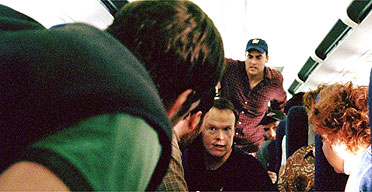
3. United 93 (Paul Greengrass, 2006)  Controversial, cathartic and crushing, this is the story of one of the many real-life tragedies that occurred on 9/11.  The fourth hijacked plane that crashed in a field was taken down by the terrorists when the passengers fought back.  Whether you believe this official version of events or not, you cannot deny the power of Greengrass's film.  Mounting the tension to unbearable levels using a real-time pace, the film explores the events of the day through those in the air on board United 93 but also allowing the viewer to see the confusion and panic unfolding on the ground at air traffic control, NORAD etc.  The last twenty minutes is incredibly difficult to watch with handheld camera adding to the realism, phone conversations scripted from the real thing but also an emotive score that cannot fail to move viewers.

2. Requiem for a Dream (Darren Aronofsky, 2000)  Another harrowing film, this time not based on real life but on a book.  Ellen Burstyn gives possibly the most moving performance ever committed to celluloid as a mother of a drug addict (Jarad Leto) who turns to diet pills to try and find happiness.  Stylishly directed by Aronofsky,  it captures the highs but mostly the sickening, soul-destroying lows of drug abuse as (SPOILER!!!) the four main characters descend into prostitution, prison, amputation and madness.  Scored by Clint Mansell, the music is as heart-wrenching as the editing and cinematography is dazzling.  This is one of the hardest films you will ever have to watch.  But you do HAVE to watch it.


1. City of God (Fernando Meirelles, Katia Lund, 2002)  The best film of the 00's is hardly surprising, it's topped so many lists already.  It's another depressing film but less so than the previous two films on this list.  Set in the favelas of Brazil, it follows Rocket, a young man who dreams of becoming a photographer but has to deal with the day to day struggles that come with being a favela dweller.  Starting in the 80s then flashing back to the 60s, Rocket narrates the changes in his slum as drug lord Lil Ze takes over the business, turning the slums into a cocaine-riddled war zone during the 70s.  The style is manic with choppy editing, handheld camera, improvised dialiogue from an astounding cast of non-professionals and use of real locations.  But it's the characters, Rocket, Benny, Lil Ze, the 'runts' that stay with you long after the film has finished.  It's a difficult watch at times (witness a very small child being forced to shoot an even smaller child) and the end is both hopeful and pessimistic, but overall the film is a powerful peek inside a world you will unlikely ever experience.


What do you think?  What have I missed?  Why are my top three so depressing? 
What are your favourite?  Please comment if you read this... it's very nice to hear from you!