Showing posts with label warner bros. Show all posts

Wednesday, 4 December 2013

The Making of Harry Potter Leavesden Studios Tour, Part 2: Backlot

Following my first post on my trip to the Making of Harry Potter studios, here is the second part of the tour which took me outside into the freezing air for fake snowfall, Harry's house on Privet Drive and the Night Bus. It was also a great chance to get some overly priced Butter Beer and unpleasant hot dogs. Still, the students we took with us loved getting to take photos on the motorbike, on the front doorstep of Harry's house and on the Night Bus. Here are the pictures I took before we went back inside for part two of the tour.


Tom Riddle's grave stone


Enjoying Butter Beer and Starbucks

 It was weird seeing this as in the original film they used a street just down the road from our college in a place called Martin's Heron. After the first film they had this built on the backlot and it seems to be a perfect replica of the house they originally used from round our ways.


Because it's the festive season they had a snow blower thing blasting out snow over the outside area which was a nice touch. However after getting a sugar rush from Butter Beer, it was time for the final part of the tour. They definitely saved the best for last!

Go back to: The Making of Harry Potter Leavesden Studios Tour, Part 1: Studio J
Go forward to: The Making of Harry Potter Leavesden Studios Tour, Part 3: Studio K

The Making of Harry Potter Leavesden Studios Tour, Part 1: Studio J

On Tuesday 3rd December 2013, I got the opportunity to accompany 50 media students at my college to the Making of Harry Potter tour at the Warner Bros. Leavesden studios, just outside London. I'm far from the biggest Harry Potter fan in the world but was excited to take a look behind the scenes of this mammoth franchise nonetheless. It certainly did not disappoint with awe-inspiring sets, props, costumes, concept art, designs, plans, and a wealth of stuff to admire for both Harry Potter fans and film fanatics alike.

This is the first part of the tour and the photos I took within the first of the two giant studios that visitors get to wander around. There are studios J and K (see what they did there?) and in between is the backlot that also has some special treats in store.

It all starts with a wander into the Great Hall of Hogwarts. After walking through the gigantic doors, you are met with the lines of tables and the costumes of the teachers at the head of the hall. It was all decked out for Christmas when we went, hence the Christmas trees and turkeys lining the tables.

Entering the Great Hall


The staff watch over the students


Empty and ready for the next group of visitors


After being ushered through the Great Hall to allow for the next group to enter, the tour gets serious with the main part of the studio dedicated to a huge amount of sets, props and decor from the films. There is also the opportunity to have a go riding a broomstick with a green screen behind you so you can then buy an extortionately priced souvenir of your time at the studio. You can get a DVD or just a photo of your time riding a broomstick through the streets of London and over a variety of landscapes.

The best of the directors

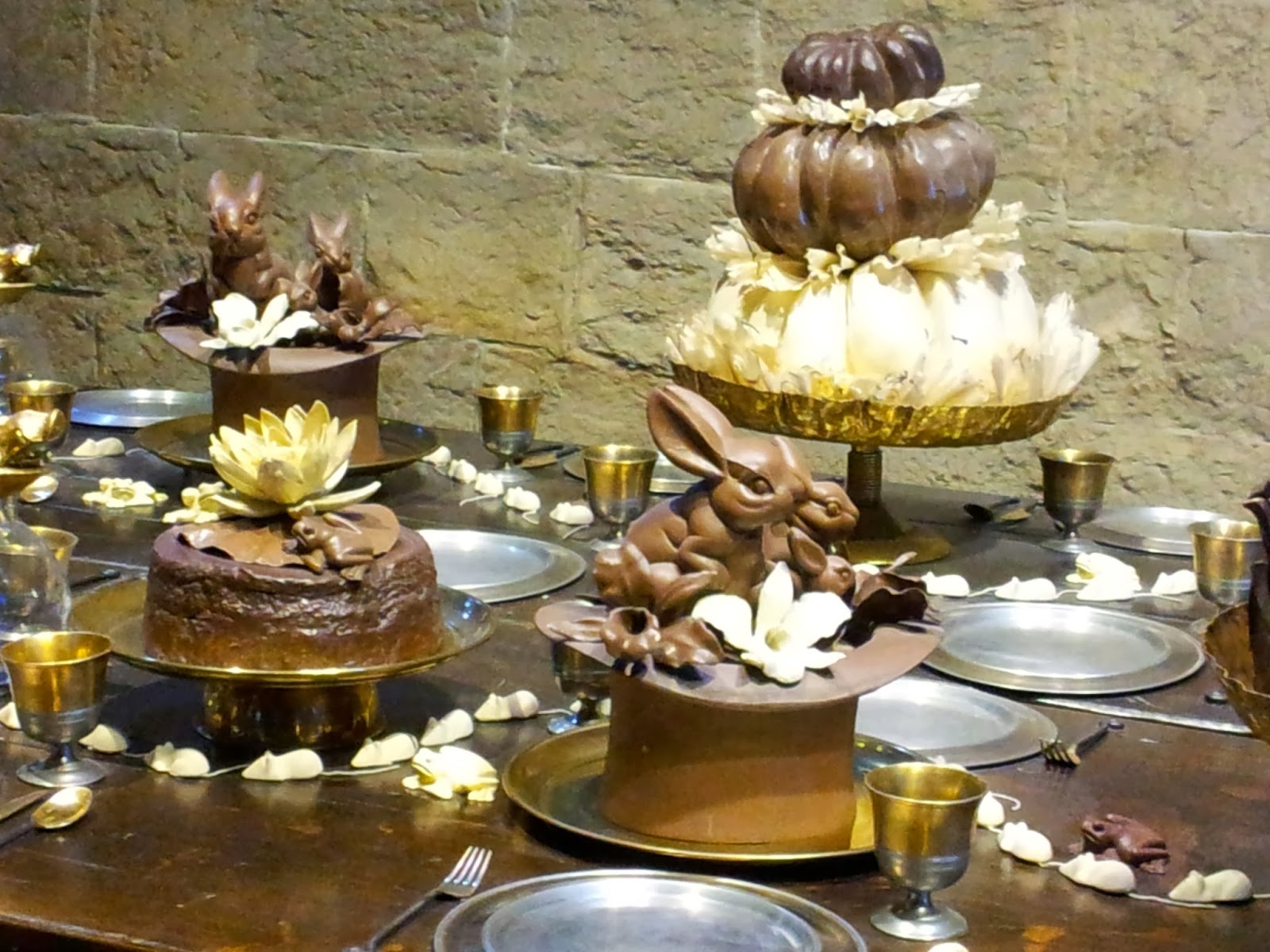
Drinks served at the Yule Ball


Inside Hagrid's hut


Opening the Chamber of Secrets


Dumbledore's office


Quidditch costumes

The Ministry of Magic


Studio J is filled with so much to take in, it should take you at least an hour to get through. I could have spent hours looking at the sets and the attention to detail that has been so painstakingly crafted by all the people who have worked on these films. The kids will love having a go on the green screen stuff and also having wand wielding lessons. However, what I was not expecting is it gets even better.

The Making of Harry Potter Leavesden Studios Tour, Part 2: Backlot
The Making of Harry Potter Leavesden Studios Tour, Part 3: Studio K

Saturday, 23 February 2013

Funding and Ownership of the Film Industry

For my article on funding and ownership of the TV industry, please click here.


I'm starting a new unit with my media students on Monday that I have never taught before. It's called Understanding the Film and Televsion Industries and their first assignment will be to look into the funding and ownership of these two media industries. In order to get a few things straight in my head and ensure that I know what I'm talking about before trying to teach them, I thought I'd give the first assignment a go myself. So here is part one on the funding and ownership of the film industry and I will try to keep ahead of the students by producing part two on the television industry asap!


The film and television industries in the UK and the US are made up of many companies that are all owned and funded in many different ways. I will first discuss the film industry and then move on to the television industry, focussing on the ways these two similar but different media industries are funded and owned in the UK and the US, referring to a range of contemporary and historical examples.

FILM INDUSTRY

The film industry in the UK is made up of a number of different parts. There are companies that are involved in Development, Production, Facilities, Distribution, Exhibition and Export. Skillset’s most recent research shows that there are ‘around 400 'permanent' (i.e. registered) companies in the film industry’ but this number can vary depending on how many film productions are being worked on in the UK at any time. Their research also shows that of these companies, ‘43% are production, 13% are distribution and the remaining 44% are exhibition companies’, meaning that much of the distribution side of the film industry is likely funded by foreign companies, often Hollywood studios that help to sell British films to US and international audiences.
               
The British film industry does not have quite the same power and wealth as the big Hollywood studios and therefore depends much more on public funding and financial aid from government intervention. In 2012 it was announced that ‘some £285 million of National Lottery money is to be put into the British film industry over the next five years’.  The British Film Institute (BFI) will determine how this money is spent after taking over funding responsibilities from the UK Film Council which no longer exists. Though there will be spending in other areas, much of the funding will be put into the production and development of future British films.


The producers of The King’s Speech for example had to scrape together the approximately £10 million budget from the following companies:

UK Film Council (presents)
Momentum Pictures (in association with)
Aegis Film Fund (in association with)
Molinare Investment (as Molinare, London) (in association with)
FilmNation Entertainment (in association with)
See-Saw Films (as See Saw Films)
Bedlam Productions (as Bedlam)


Some of these companies, for example the American The Weinstein Company, would invest in production in order to gain the distribution rights and therefore a larger share of the profits when it is released. ‘The Weinstein Company (TWC) is a multimedia production and distribution company’, independently funded by its own profits, and ‘also active in television production’ showing it is both vertically and horizontally integrated. Vertical integration is where ‘a company expands its business into areas that are at different points on the same production path’ so when a film company owns the means to produce films and then also the means to distribute them, it is said to be vertically integrated. TWC is also horizontally integrated because it has acquired ‘additional business activities that are at the same level of the value chain in similar or different industries’. Not only can it produce films but it has also expanded into producing television shows as well.


Concerns were raised in the past about the major Hollywood studios’ oligopoly over the film industry. The so called ‘big 5’ studios were vertically integrated to the point where they owned the means to produce, distribute and exhibit their own films which meant that other films did not have a chance against the poser of these big studios. The Paramount Decree passed in 1948 meant that the studios had to sell their cinema chains as this much vertical integration was seen as anti-competitive and therefore made illegal, diminishing the power of the old Hollywood studios.


However despite these moves to stop excessive levels of vertical integration, the film industry is still dominated in the US and UK by global companies such as Time Warner. Warner Bros. Pictures is a subsidiary of the global conglomerate Time Warner and produce films such as the Harry Potter franchise. But Time Warner also owns HBO, ‘the world's most successful pay-tv service’, the Turner Broadcasting System that ‘operates worldwide news, entertainment, animation, young adult & kids media networks and related businesses’ and Time Inc who are ‘one of the largest branded media companies in the world, with a portfolio of 96 titles’ which means they are horizontally integrated over television, film and print media. Warner Bros operates internationally all over Europe, Latin America, Japan and Australia leading to some concerns over huge companies like this and their potential influence over a global audience.

Bibliography so far:


 Part two on the television industry coming soon!